
Pandemic Economics
These proposals were released in March 2020, in the earliest weeks of the COVID-19 pandemic in the United States. Hospitals were running out of ventilators and protective equipment, testing capacity was virtually nonexistent, and supply chains were collapsing. New Consensus argued that the federal government needed to mobilize industrial production capacity on a WWII scale—using military logistics and emergency financing—to rapidly manufacture the medical supplies, testing infrastructure, and eventually vaccine production capacity that the crisis demanded.
Military Production Mobilization
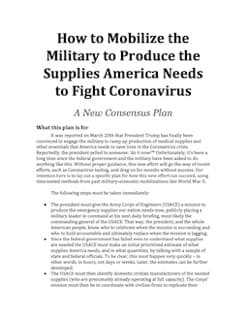
On March 20th, 2020, President Trump made the decision to engage military resources for ramping up medical supply production. Our proposal drew on historical precedent from WWII-era mobilization efforts and outlined specific implementation strategies to prevent delays similar to those experienced during the testing rollout.
The military has unique capabilities in logistics, manufacturing coordination, and rapid deployment that can be leveraged during national emergencies. Our report detailed how these resources could be directed toward producing ventilators, personal protective equipment, and other critical medical supplies.
Economic Response
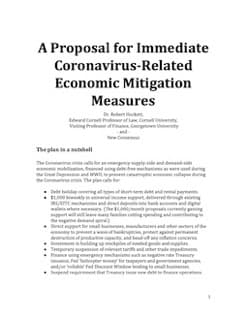
We advocated for emergency supply-side and demand-side economic mobilization utilizing debt-free financing mechanisms modeled after Depression and WWII-era approaches to prevent economic collapse.
The proposal outlined how the federal government could use its monetary authority to fund emergency measures without adding to the national debt burden, while simultaneously supporting workers, businesses, and state and local governments facing unprecedented fiscal challenges.
These recommendations drew on the same economic mobilization framework that New Consensus developed for the Green New Deal, demonstrating how crisis response and long-term transformation can work together.
Published: March 2020