Chapter 03
Building America by Building EVs for the World
Introduction
This is a national mission to resurrect the U.S. auto industry by working to win roughly one-third of the world’s light-duty EV sales within a decade — projected to be around 30 million vehicles per year. Doing this will speed the global transition to EVs by increasing global supply, meet domestic emissions reduction targets, and create millions of new high-paying jobs that will bolster national wealth and general prosperity for the rest of the 21st century.
This national mission is necessary for America to meet its climate goals and prevent the most catastrophic impacts of climate change. Vehicles powered by fossil fuels, or internal combustion engine vehicles (ICEVs), produce a significant share of global carbon dioxide emissions.1 In 2023, private cars and vans were responsible for around 10% of global energy-related CO₂ emissions and more than 60% of road transport emissions.2 More than 1.6 billion cars and trucks are on the road today, and that number is expected to grow to over 2.2 billion by 2050.3 The longer the world takes to transition away from ICEVs, the worse climate change will get. America, as the world’s largest economy and largest historical polluter, has the capability and responsibility to help the world transition away from ICEVs as quickly as possible.
Battery-powered electric vehicles (EVs) have emerged as the undisputed global successor to ICEVs. The transition to EVs is already underway and accelerating every year. Global sales have risen from barely 100,000 in 2012 to over 20 million in 2025 — now accounting for roughly one in four new cars sold worldwide.4 China alone sold more than 13 million EVs in 2025, capturing over half the global market, while Europe posted 33% year-over-year growth.5 Yet the United States is losing ground: U.S. EV sales declined by roughly 2% in 2025, with a dramatic Q4 collapse after federal tax credits were eliminated in October.6 Unfortunately, looming materials shortages, production bottlenecks, hostile policy reversals in the U.S., and several barriers to mass consumer adoption threaten to prevent most nations — America chief among them — from fully retiring their ICEVs and gas pumps in favor of EVs and charging stations.
As is the case for all of the Mission for America national missions, the goals of this national mission will be achieved through a combination of legislation, presidential leadership, and leadership by a team at the Reconstruction Finance Corporation (RFC) led by a respected industry leader. Success will depend on the president’s ability to win the support of the public, relevant industries, and local governments.
It can’t be emphasized enough that the goals of this national mission, though ambitious, are achievable. Consider the massive scale-up accomplished by the U.S. auto industry in World War II. It was both larger and faster than what we’re proposing here, and enacted at a time of vastly inferior technological and managerial capacity. Incredibly, that effort called upon automakers not only to radically scale up production but also to switch from building cars to building airplanes, which had never before been mass-produced in any country. If we were able to achieve that level of mobilization then, surely we can accomplish this national mission now. The Mission for America merely calls for increasing investment in an already dynamic domestic auto industry, to make a type of vehicle they are already making — roughly a threefold increase over current production numbers of total ICEVs.[^6a] In recent years, many other nations with fewer resources and less expertise have accomplished far more than what we’re proposing here.7
We recommend that this be the central and first national mission launched by the Mission for America president. Not only will this mission’s benefits to ordinary Americans be direct and unambiguously positive, but this mission will also be the easiest to explain, as it deals with a familiar and important cornerstone in the lives of ordinary Americans: cars and the practicalities of powering them. This stands to be the best mission for the president to use to introduce and fully elaborate the concept and structure of the Mission for America and its component national missions for the media, business, and the public. In this chapter, we deal with specific political strategies the president can use for introducing and completing the EV mission. For a deeper discussion on the presidential leadership required by the Mission for America, see our introductory chapter on presidential leadership.
In many ways, this is the most traditional of all our national missions. The auto industry has been revived, transformed, and expanded several times through strong public leadership, including during WWII and the bailouts of the 1970s and 2000s. The national charging network that must be built to support the transition to EVs is similar in ambition and scope to the interstate highway project begun in the 1950s.
Without the federal action this plan recommends, the world will fail to transition from ICEVs in time to prevent catastrophic global warming. Although global EV sales have surged to over 20 million per year, the job before us is to replace more than 1.5 billion ICEVs as quickly as possible — a task that demands sustained production at multiples of current levels for decades. Obstacles to mass adoption include insufficient charging infrastructure, dangerous supply chain concentration (with China refining over 60% of the world’s lithium and three-quarters of its cobalt), and a boom-bust cycle in critical mineral investment that risks shortages later this decade.8 The United States is now actively moving backward — eliminating federal EV tax credits and rolling back fuel economy standards — even as competitors like China and Europe accelerate their transitions.
If it fails to fully mobilize to seize this opportunity, the United States will miss out on a chance to prosper from the rise of EVs, and will suffer enormously from the decline of ICEVs. Because their engines are simpler, electric vehicles use on average only two-thirds the labor that goes into ICEVs. This means that if the U.S. fails to increase total global market share of vehicles in general (which will soon be 100% EVs whether we like it or not), then a large portion of our remaining auto jobs will be lost.
The EV mission will succeed and be wholly beneficial only if it happens as part of the comprehensive Mission for America. Switching to EVs will be truly clean if electricity generation and manufacturing of materials such as steel are also clean. Power generation and manufacturing must be not only decarbonized but also scaled up massively, which our missions for clean power and clean manufacturing will accomplish. To create new manufacturing capacity, adequate raw materials and processing capacity will have to be secured. Sufficient financing and production-oriented research and development will be available only if the new public financing institutions recommended in the Mission for America are created and utilized to their full potential.
We agree with the insistence that it is time to move the world away from cars and toward more public transportation, more walkable cities and towns, more cycling, and smaller electric vehicles such as e-bikes. An entire national mission of the Mission for America is devoted to making all that happen. Nevertheless, no matter how much public transportation is promoted, the global demand for cars will only increase as billions of people rise out of poverty and join the global middle class. Even in American cities with the highest rates of biking and public transport usage, the majority of trips are still made in cars. The EV mission will help ensure that those cars will be powered by clean electricity, not fossil fuels. Equally important, they must be made of clean steel and other zero-emission industries — which the Mission for America would rapidly create in the United States and export around the world. Cars and trucks will play a central role in society for the rest of the 21st century no matter how radically the world finally responds to climate change. This mission is designed to make all these vehicles electric in as short a time as possible, with as few emissions and negative environmental impacts as possible.
Context
The following several sections provide information needed to understand the problems involved in the EV transition and the solutions we propose in this national mission.
The Goal Defined
The objectives of the EV national mission include enabling the world to transition to EVs as quickly as possible, meeting U.S. emissions reduction targets, creating millions of new high-wage jobs, and increasing overall national wealth. In this section, we will precisely define the specific targets that the EV national mission must reach to fulfill its objectives.
30 million EVs per year made in the United States. The global auto industry is rapidly shifting to EVs — over 20 million were sold worldwide in 2025 — but the United States is being left behind. While Chinese automakers now produce more than half of the world’s EVs at prices that undercut American competitors, U.S. EV production remains a fraction of what the market demands. The EV mission calls on the United States to capture a leading share of global EV manufacturing by offering the same kinds of incentives and industrial support to automakers within our borders as competitor nations provide inside theirs.
The national mission for EVs includes cars, vans, SUVs, and light trucks. It does not include large trucks, long-haul trucks, buses, or other large vehicles; those are dealt with in our national mission for decarbonizing medium- and heavy-duty vehicles. To count as being made in America, the following qualifications need to be met: over half of the battery needs to be built in America, over half of the critical minerals used in the vehicle must be from the United States or a country in which the United States has a trade agreement, and final assembly of the EV must take place in the United States.
The EV national mission calls on the president and the EV team at the RFC to attract up to a third of new global EV manufacturing capacity to the United States within a decade — still only a fraction of the auto market share that was held by the U.S. for much of the 20th century. Because this quantity will be a moving target for some time, we’re recommending the goal of “30 million EVs per year produced in the U.S. within a decade” as an unambiguous target. Based on current trends, 30 million vehicles would represent approximately one-third of total global light-duty vehicle sales.10 That target would require automakers to build approximately three times as many EVs as the number of ICEVs currently produced in the U.S. — well within the bounds of what is possible both physically and economically.11
100% EV sales in the U.S. within a decade. This mission sets the goal of 100% of passenger vehicle sales in the U.S. being EVs within a decade of the mission's launch. We believe that this will come very close to happening on its own if all production targets above are hit. Some global automakers are already planning to end production of ICEVs at some point in the next 10 years. The EV share of domestic vehicle sales will, however, be an important metric to watch for the president and the EV mission team at the RFC.
Nearly 100% EVs on the road within a decade. This target is important for the purpose of meeting U.S. emission reduction goals, but its significance extends beyond that. If the U.S., the most gas-guzzling of nations, not only massively scales EV production but also gets virtually all ICEVs off the road in just 10 years, the world will see what is possible. Ultimately, this will profoundly affect global targets for transitioning to EVs. For several reasons, we believe the best way to make this happen is not by passing a sweeping ban of ICEV ownership, but by offering abundant financial carrots to entice drivers to upgrade and by building the world’s best EV charging network, thereby achieving a critical mass of EV ownership that will cause a full-scale retirement of the nation’s ICEV fueling and maintenance networks. Already, drivers are making the switch to EVs. This mission merely accelerates a process already in motion and ensures that low- and middle-income Americans are supported to switch on their own terms without incurring devastating financial hardship.
The strategy baked into these goals is to immediately create enough domestic demand to drive adequate investment into the U.S. EV industry to scale it all the way up to capture a third of global market share. If all goes to plan for the warp-speed U.S. transition to EVs, domestic demand will probably start to slow after the first decade. The big bet in this national mission is that exploding global demand at that time will be met by a booming U.S. industry. This is exactly the strategy that China has been following for years, and that other auto-making nations are beginning to implement.
To be clear, our goals of 100% EV sales and nearly 100% EVs on the road don’t require that all of those EVs be produced in the U.S. We believe there are a number of reasons it would be counterproductive for this mission to protect the domestic EV market from foreign competition, as is the policy in countries like China. Unlike China, the U.S. would not benefit from protectionism in this case because we already have one of the world’s most advanced auto industries and some of the world’s most popular auto brands. American EVs are among the best in the world, with the U.S. topping the list of EV-exporting nations until just recently. Raising tariffs will lead to retaliation that will hurt U.S. export growth. On top of that, achieving a critical mass of EV ownership as fast as possible will support domestic EV production even if foreign models are a big part of the early supply. Additionally, foreign EV makers that have sales success in the U.S. are more likely to build production facilities here as demand expands. While tariffs are used elsewhere in the Mission for America, this is one case where carrots such as tax credits and other assistance will be much more successful than sticks. Much of this was demonstrated by the success of Biden administration policies in attracting new production capacity from abroad — before those policies were reversed.
The ambitious goals of this plan are chosen with the assumption that the world will be in the middle of a rapid transition to EVs within a decade. Since there’s no way to know for sure if that will be the case, this goal constitutes a national, entrepreneurial bet of the kind that all successful industrialized nations regularly place, a topic we discuss at length in the Mission for America’s introductory chapter. Over the past several decades, the U.S. has stopped betting on national industrial development; instead, we’ve betted on financial bubbles that have frequently ended with expensive public bailouts. It’s time to start making industrial bets that will provide prosperity for all of America, not just bonuses for bankers and payoffs for elite shareholders.
For the United States to achieve any of the three goals above, two crucial factors must hold true: EVs must surpass ICEVs in terms of affordability, and they must offer greater convenience in ownership and operation. The American public will embrace the transition to EVs only when they are convinced that it represents a genuine improvement to their financial circumstances and way of life.
High cost is one of the main factors preventing the mass adoption of EVs, with prices remaining high relative to ICEVs.12 The U.S. must offer long-term, generous subsidies to consumers and manufacturers to bring down the cost of an EV below that of an ICEV. As explained in more detail in the introductory chapters, boosting domestic demand is a proven, centuries-old model for expanding desirable industries. Several major industrialized nations — China chief among them — are currently using this strategy to scale their own EV industries. Failing to match their efforts will mean missing out on one of the most lucrative global business opportunities of the 21st century. The Biden administration expanded existing consumer incentives, but too many counterproductive restrictions remained in place and some new ones were added. The Trump administration then reversed much of that progress, eliminating key EV tax credits and freezing clean energy funding. Our recommendations dramatically expand incentives for consumers to purchase EVs.
The perception of inconvenience stands in the way of EV adoption even more than cost. Drivers need to know that with an EV, they can go anywhere they want, whenever they want. People will not adopt EVs en masse until they are as convenient to own as ICEVs, full stop. Coaxing people out of that anxiety involves offering a viable and accessible alternative that clearly outstrips the status quo. Making EVs more convenient than ICEVs will require the creation of a world-class charging network made up of millions of home chargers and public fast chargers. Every American must have access to a quick and affordable charge, no matter where they are or where they plan to go.
Why This Goal Is Possible
Tripling U.S. vehicle production, having 100% of new vehicle sales be EVs, and getting to nearly 100% EVs on the roads all in 10 years is ambitious but legitimately achievable for several reasons:
It’s already happening — everywhere but here. EVs now account for roughly one in four new cars sold worldwide, with China approaching 50% and Europe above 25%. In the United States, EV sales hit a record 10.5% market share in Q3 2025 — then collapsed to 5.8% in Q4 after the federal tax credit was eliminated, demonstrating both the strength of consumer demand and the fragility of progress built on incentives alone.13 The U.S. fleet is replaced periodically, with most vehicles being retired after 10-15 years.14 Therefore, this goal requires merely accelerating a process that’s already in motion. During the course of this plan’s execution, many new ICEVs will still be sold, so the rate of replacement of ICEVs will have to increase significantly year on year and will have to eventually replace vehicles that are quite new.
The “Big Three” U.S. automakers — Ford, General Motors (GM), and Chrysler (now owned by Stellantis) — were, until recently, prepared to invest massively in EV manufacturing. GM announced $35 billion in EV production through 2025, Ford committed $50 billion by 2026, and Stellantis pledged $35.5 billion.15 The passage of the Inflation Reduction Act in 2022 accelerated these commitments further, triggering a wave of new factory announcements. But when the policy environment shifted — with the elimination of key tax credits, tightened sourcing rules, and a hostile regulatory climate — the Big Three reversed course. Ford cancelled battery joint ventures and shuttered newly built plants. All three pivoted back toward hybrids and trucks. The lesson is clear: domestic automakers will invest in EVs at scale, but only with sustained, reliable policy support. The Mission for America is designed to provide exactly that — through institutions like the RFC that are harder to dismantle than tax credits.
It’s not that big of a leap. Our goal asks the U.S. auto industry to convert to 100% EV production — something that some automakers have already committed to — and to triple its production output within a decade. While that’s big, it’s not unusual for even well-established industries to make that kind of leap. Japan and Germany both made similar leaps in auto production over 10-year periods in the 1960s and 1970s. China accomplished an even bigger leap between 2008 and 2018, with an auto industry that had been operating since the 1950s.16 Looking to other industries, countless examples of much larger and faster growth spurts are available around the world. One example is the smartphone boom, which put powerful computers in the pockets of half the world in just a handful of years.
Automakers in the U.S. are more than capable of meeting this goal. Not only is the U.S. auto industry large and technologically advanced, but it is also constantly innovating and capable of rapid change. It was the first large-scale auto industry in the world, and several cycles of struggle and revival have made it relatively agile and resilient. The industry includes the original Big Three U.S.-based automakers, several foreign automakers, Tesla, and other promising EV start-ups. American automakers have seen steadily increasing profits while continuing to invest in new manufacturing and R&D, even in the wake of supply shortages and the COVID-19 pandemic.
EVs are easier than ICEVs to make. Converting the auto industry to a 100% EV future requires no new technology. After all, the U.S. has been making EVs since the turn of the century — the 20th century, that is!17 The process of building EVs is simpler than building ICEVs because the engine has far fewer parts. This presents an additional reason to scale up manufacturing in the U.S., as keeping production constant during the switch to EVs could cause up to a 30% decrease in auto industry working hours.18 As mentioned above, a net increase in the number of cars produced in the U.S. would be needed to merely maintain auto industry employment. An EV does, however, cost more than an ICEV to build because of the battery, which can account for 30% to 40% of total production costs.19
People want EVs because they’re better. Owning and driving an EV does not require sacrifice. Compared with ICEVs, EVs accelerate faster, are nearly silent, break down far less often, are cheaper to own, and are more convenient on most days because home-charging eliminates trips to the gas station. And in most cases, EVs are better cars in many other ways — for example, in user experience and features — than equivalently priced ICEVs.
EV batteries last far longer than most people expect. The most common concern about EV ownership — that the battery will wear out and cost a fortune to replace — is not supported by the data. Modern EV batteries are designed to last 300,000 to 500,000 miles, and real-world data shows they lose only about 2% of capacity per year. After a decade of driving, a typical EV battery retains roughly 80% of its original range — more than enough for daily use. Only about 2.5% of EVs ever need a battery replacement. When replacement is necessary, costs currently range from $7,000 to $15,000 depending on the model, but battery cell prices are falling fast and are projected to cut those costs in half by the end of the decade. Federal law already mandates an 8-year, 100,000-mile warranty on every EV battery sold in the United States.
Those benefits of EVs are becoming widely appreciated by consumers. A 2025 Gallup survey found that 51% of Americans either own an EV, are seriously considering buying one, or might consider it in the future.20 The gulf between Americans’ interest and actual purchases comes mostly from a handful of concerns: the relative cost of EVs compared with ICEVs, a perceived scarcity of charging sites, and a general lack of knowledge about EVs and how they work.22
Our plan will level the playing field for EVs through direct public investment via the RFC — financing domestic manufacturing at scale, building a national charging network, and supplementing these efforts with consumer tax credits and subsidies to drive adoption. As ownership of EVs spreads, more Americans will become familiar with their benefits. Our proposals to achieve these goals are overwhelmingly popular. A majority of Americans support incentives for the production and sale of EVs.^23 The president can embark on this national mission knowing that the public has already bought into its broader narrative.
Reaching a critical mass of EV ownership will make owning an ICEV inconvenient. The real stretch goal in this mission is aiming for nearly 100% of the cars and light trucks on the road being electric within a decade. We believe it is reasonable to expect nearly all cars on the road to become electric within a decade if all Americans are given the financial means to switch — which our plan offers. And at a certain point, owning an ICEV will become excessively inconvenient and expensive anyway. Our recommended grants and subsidies are intended to allow all Americans to make the switch without financial hardship.
Similar to the switch from horses to cars for transportation, from whale oil to kerosene to electricity for lighting, and from cell phones to smartphones for communication, with certain technologies, when a critical mass is achieved, replacement of the old can happen quickly and completely. As gas stations and ICEV mechanics become scarcer, as auto parts for old ICEVs become more expensive to acquire, and, perhaps, as gas prices rise with the fall of the fossil fuel industry, driving an ICEV will become impractical. As long as the cost of switching is covered, which our plan calls for, then it’s hard to see why anyone would not accept a new, fast, reliable EV that they never have to fill up in place of an old ICEV that has become difficult and expensive to fuel and maintain.
Of course, many people will keep ICEVs for sport, hobby, or nostalgia. This is why our goal is defined as “nearly all” cars on the road being EVs. The most generous subsidies that will be offered to low-income people for substituting old ICEVs with EVs require that an ICEV be exchanged. A buyback program will offer cash for ICEVs at a varying level that will be tuned by the RFC team to respond to availability of EVs and prices of used ICEVs.
Historical Precedent
Deciding to scale a domestic auto industry — and succeeding at doing so — is something that nations do all the time. Such growth has been at the center of many industrialized nations’ stories of achieving and maintaining prosperity.
We’ve argued in the introductory chapters that, in order to become and remain prosperous, all nations need to intentionally foster new industries, and enlarge and upgrade old ones. We won’t repeat those arguments here, but it’s appropriate to cover the unique and central role that motor vehicle manufacturing has played in the rise and renewal of many of the richest industrialized nations — most of all, that of the United States.
The rise of the U.S. auto industry transformed all societies on the planet. In its wake, every nation that could not produce its own vehicles was dependent on others for basic mobility and national defense, and would leak wealth every year in exchange for cars and trucks. Therefore, starting in the early 20th century, virtually every industrializing nation threw itself into creating a domestic auto industry. And it’s notable that they did this even when competing with the U.S. appeared to be futile. Because of those efforts, nearly every rich industrialized nation in the world today has either a full-scale auto industry or a significant auto parts industry. Most successful industrialized nations today have large auto industries which constitute sometimes 10% or more of GDP.24
Nations that successfully grew an auto industry against all odds to compete with the United States generally had one thing in common: They created, or inherited, some system for making long-term, low-interest financing available to automakers and their suppliers. The Mission for America provides such a mechanism through the Reconstruction Finance Corporation. Many nations also imposed tariffs to protect inferior domestic automakers from foreign competition. As explained above, we believe that in the particular case of EVs, protectionism via tariffs would generally be counterproductive for the United States.
For most of the 20th century, leaders could easily argue for these policies because the populations of industrializing nations clearly saw their own prosperity intimately tied to the amount of goods their country could make and/or services they could do. Building and maintaining national auto brands also became a matter of national pride. Post-war European nations and Japan never questioned whether they would rebuild their devastated auto sectors.
As the laissez-faire, or neoliberal, ideology gained ground in the late 20th century, many nations gave up on their pursuit of building an auto industry, believing that it was futile to try to compete with far more established auto-making nations. Believe it or not, Japan almost gave up on its dream of becoming a major auto-exporting nation in the 1950s when its first export was received unfavorably by the world. A national policy debate almost concluded with a decision to quit. Fortunately for future Japanese prosperity, investment was continued into the auto industry, and Japan went on to make the world’s highest quality vehicles, and to lead a world revolution in manufacturing techniques.25
When the U.S. faced increasing competition from Europe and Japan in the decades following World War II, it also had a national policy debate on auto manufacturing, ironically reaching a conclusion opposite to that of Japan. This led to the gradual shrinking of the U.S. auto industry down to its current size which, while still huge compared with most countries, is only a shadow of its former self. This was a tragic and unnecessary turn considering the recent and wildly successful record of state-led investment in the U.S. auto industry before and during World War II.
We discussed the World War II example at length in the introductory chapters, and it bears mentioning that the story of the auto industry during World War II must be an important part of the president’s campaign to win support for the EV mission. In World War II, the auto industry was called upon to retool for an entirely different purpose — building airplanes at massive scale, something which at the time had never been mass-produced and which many engineers believed would be impossible to mass-produce. Our solutions presented in this chapter are heavily inspired by the World War II experience.
In addition to the World War II example, the U.S. has an even more recent example of the auto industry working with the federal government to resurrect itself: the 2009 auto bailouts. The auto bailouts can almost be looked at as a proof of concept of the EV mission. The bailouts were led by a team of experienced business leaders installed at the treasury but given great autonomy and power normally unavailable to government officials.26 The team made a huge quantity of financing available to the industry in exchange for the industry coming up with and executing on plans for renewal.
A government forcing CEOs to be bolder and more innovative doesn’t fit the story of how the world works that most American policymakers and politicians are familiar with. But as we explained in our opening chapters, the governments of nearly all rich countries have intentionally launched and grown industries through this dynamic. It is a complex story in which both government and business share equally important roles and responsibilities. On the one-hand, it’s a normal and routine thing that nations do; but on the other hand, it runs against the story American elites have told for decades. For the EV mission to succeed, the president must show America that successfully transforming and growing a major industry such as auto is a normal and necessary step for any nation to take.
Mission for America Comprehensiveness and the EV Mission
The Mission for America national missions are designed to work together comprehensively to fix America’s biggest problems and to accelerate the global transition to net-zero greenhouse gas emissions. In our introductory chapters, we explained why we believe a comprehensive approach is the only way to adequately solve either the climate crisis or America’s systemic decline. Here, we will flag the ways that the success of the EV mission depends both on its own internally comprehensive approach and on the rest of the national missions also being set in motion.
Converting to 100% EVs without also getting to 100% clean power generation will mean that EVs will continue to be powered by fossil fuels. There is little point in speeding the complete transition to EVs in 10 years if the transition to clean power generation is not also achieved on the same timeline.
Speeding the switch to EVs, and helping that to happen worldwide, will mean a very large increase in the production and transportation of steel and other materials that currently would cause an enormous quantity of greenhouse gas emissions. If those industrial processes are not converted to clean alternatives, a rapid switch to EVs would result in a large net increase in emissions in the near term.27 The parallel transformations of steel and other carbon-emitting industries that are detailed in another national mission must go along with the switch to EVs.
The switch to EVs will also require a large increase in the usage of many minerals for which supply chains are dangerously concentrated. For example, lithium, a key element for making EV batteries, saw its price spike to over $80,000 per metric ton in 2022 before crashing below $10,000 by mid-2025 — demonstrating both the fragility of current supply chains and the way price volatility can discourage the very mining investment needed to meet future demand. China dominates these supply chains at every stage: Chinese companies are associated with nearly 60% of global mined lithium supply through ownership stakes worldwide, refine approximately two-thirds of the world's lithium into battery-grade material, and control 80% of cobalt production in the Democratic Republic of Congo.28 The U.S. has no such access and is developing very little mining around its own relatively abundant lithium reserves.29 The story is the same with many other minerals. A national mission for securing access to key natural resources will be required in order for the EV transition, along with many other pieces of the overall transition, to become possible.
Another national mission for homes and buildings is critical to the success of the EV mission for several reasons. First, at least tens of millions of homes need upgrades to the power lines that connect them to the grid in order to be able to adequately charge an EV overnight while also carrying power for other needs such as appliances, heating, and cooling. Many homes will need upgrades to some of their internal wiring as well. Additionally, in one important way, the switch to EVs is a critical step toward achieving a 100% clean power grid while meeting rapidly increasing demand for electricity: Homes must be equipped to allow EV batteries to serve as energy storage that can help power homes when necessary. This will help overcome intermittency issues that come with wind and solar power, and will allow communities to get through energy usage spikes driven by extreme weather before all the new power generation and storage called for in our clean power mission comes online.
As with virtually all the national missions in the Mission for America, success will be impossible without the coordination and long-term funding provided by the Reconstruction Finance Corporation. In the case of the auto industry — as with many of the industries dealt with in our national missions — it is simply not in the interest of private banks and investors to take this bet unless the federal government assumes the lion’s share of overall risk.
Why the U.S. Needs to Get Back to the Business of Making Cars
The U.S. was home to the world’s first large-scale, mass manufacturing auto industry, and for most of the 20th century, it made more vehicles than all other nations combined.30 Starting in the 1960s, production began to decline in terms of global market share and, in the 1980s, even in absolute numbers of vehicles produced.^31 Today, the U.S. auto industry employs one-tenth the number of workers it did at its peak in 1978, with 12% of world market share compared with the 1950 peak of 76%.32
Losing the bulk of the nation’s auto industry was a painful blow to U.S. prosperity and national wealth. From the 1970s to the present, millions of families lost one or more high-wage auto jobs that generally included full healthcare coverage, generous pensions, and other perks such as deep employee discounts on cars and trucks for all family members. The vast majority of these workers never found comparable jobs again. Many ended up in low-wage service jobs, or in low-wage non-union manufacturing jobs. Millions joined the growing ranks of the permanently unemployed, or “discouraged workers.”33
Entire communities were devastated by auto plant closures, with the impact falling earliest and most heavily on Black communities.34 The decline of the auto industry contributed significantly to the U.S. trade deficit, which began to grow consistently after 1975.35 The persistent U.S. trade deficit was a major factor in the depletion of household wealth and the rise in the total debt held by households, governments, and businesses.36
During the demise of the U.S. auto industry, America’s “Big Three” automakers continued to grow as powerful global brands. They invested in plants all over the world, as well as buying stakes in, and launching joint ventures with, foreign automakers. They also grew as financial companies in step with the general financialization of the U.S. economy.37 To explain their divestment from the U.S industry, leaders cited several factors, including high wages, labor disruption, labor market inflexibility, the burden of healthcare costs, environmental regulations, and the desire to invest in lucrative new consumer markets such as China.
However, over the same period, all advanced auto-making nations faced the same pressures but did not follow the U.S. in dismantling their domestic auto industries. Most other auto-making nations were equipped with public or long-term-focused financial institutions that could provide patient capital for investment in modernization and automation, and economic planning institutions that could make sure it happened.38 These institutions had been active throughout the late 19th and early 20th centuries, during the initial sprints to catch up with the U.S. and Britain, the continued expansion around the world wars, and the post-war reconstruction period.
By investing in automation, countries such as Germany and Japan dramatically increased worker productivity and were therefore able to retain a much higher percentage of their auto production.39 Today, Germany employs a far higher percentage of its workforce in auto manufacturing than the U.S., and its workers are far more productive than U.S. auto workers, which is why unions in Germany have been able to negotiate much higher wages than their U.S. counterparts.40
In the same era, offshoring increased even in the face of steep challenges. U.S. and foreign automakers poured billions into developing nations such as China during this period, only to face a scarcity of skilled labor, insecure property rights, unpredictable legal environments, and burdensome requirements for technology transfer and local staffing at all levels.
So why did investment by U.S. and world automakers in China skyrocket during the decades of U.S. auto decline? China followed the exact same playbook that had been used by European auto-making nations, Japan, and Korea in the 20th century to catch up with more advanced nations. This strategy protected China’s domestic market and granted access to companies only if they were willing to produce in China; willing to transfer technology, know-how, skilled workers and managers to China; and willing to commit to buying parts and materials from Chinese manufacturers. The Chinese central and local governments accommodated foreign automakers in countless ways, such as by providing land, facilities, power, worker recruitment, and training. Ultimately, these were all things that the U.S. government had provided to the auto industry during its period of rapid growth around World War II.41
The global transition toward EVs offers an opportunity for the U.S. to rebuild its auto manufacturing sector and reverse four decades of decline. Millions of new jobs can be created not just by converting existing ICEV manufacturing to EVs, but also by expanding the entire American auto sector to become a global leader once more.
The EV transition will fully benefit American workers only if they have the opportunity to participate in production on a large scale. Merely replacing existing ICEV factories with EV factories will result in a net job loss, because EVs require significantly fewer parts and less labor to manufacture. While this means companies can build more EVs with fewer resources, switching over to EVs will decrease the total number of jobs required to maintain the current rate of production.42 Estimates vary for the difference in the number of labor hours required to make an EV vs. an ICEV, but several have come in at around 20% to 30% less.43 Therefore, the EV mission’s aim of increasing total production volume by about 300% would not result in a 300% increase in auto jobs. Nevertheless, it would mean a significant increase in high-wage auto jobs in America.
Foreign countries without strong domestic auto industries will continue to be dependent on ICEVs unless the major industrial powers help them transition. There are nearly 1.5 billion ICEVs on the road globally, and that number is only going to go up, with some studies estimating that the number of cars on the road will reach two billion by 2035.44 The largest growth in passenger vehicle usage is in fast-growing, low-income nations, most of which don’t have their own auto industries.45 As these economies continue to grow, and as passenger vehicles play a larger role in day-to-day life, they will rely more on dirty ICEVs that contribute to climate change and poison local communities with pollution. Auto-making nations face a choice to either help supply EVs or to allow, through their lack of action, hundreds of millions of new ICEVs to populate the world’s roads for decades to come.
China is rapidly becoming the world’s dominant EV supplier, but its exports alone will not transition the global fleet. In 2024, China produced over 12 million EVs — more than 70% of global production — and exported roughly 1.25 million, making it the world’s largest EV exporter.46 But even at this scale, Chinese EV exports represent a fraction of what is needed when more than a billion ICEVs need to be replaced. Europe’s EV exports are growing but remain modest, at roughly 830,000 in 2024. Meanwhile, Western tariff barriers — including a 100% U.S. tariff and EU countervailing duties of up to 36% on Chinese EVs47 — are slowing the flow of affordable EVs to the markets that need them most. Without a major U.S. industrial effort, the developing world’s EV transition will be supplied almost entirely by Chinese manufacturers, deepening global dependency on Chinese industrial capacity and supply chains at the expense of American industry and strategic interests. China and Europe are making important steps toward growing their EV industries, but the current global rate of EV production and export is nowhere near sufficient to replace over a billion ICEVs — and the United States cannot afford to cede this market by default.
The United States can build on the steps taken by Europe and China to begin supplying the world with millions of EVs. The United States is the world’s largest economy and home to the second largest motor vehicle industry in the world. Even after years of decline, the American auto industry is home to some of the best known and most respected auto companies in the world, and has an experienced and adaptable workforce. And as the world’s sixth largest exporter of automobiles, the United States still has an export base to build from.49 The United States therefore has the capacity, and obligation, to provide other countries with the EVs they need. No other nation is in the unique position of America to decarbonize the global transportation system by supplying millions of EVs to countries across the world. This national mission will equip Americans with tools to capitalize on this position by supplying countries around the world with affordable, high-quality EVs.
Solutions
The solutions presented below aim to triple the size of the American automotive industry, build the world’s best charging network, and help every American transition to EVs. As with other national missions, our solutions here rely heavily on the Reconstruction Finance Corporation which will offer crucial coordination, investment capital, and other types of support to industry players of all sizes.
As with all other national missions, the EV national mission will require bold and direct leadership from the president, their administration, and the RFC’s EV team. Congress must pass sweeping legislation which includes lucrative incentives for EV investment and a ban on new ICEVs that takes effect at the end of the mission's first decade. The overall approach combines economic incentives with regulatory mandates, buoyed by executive leadership and a vision for a resilient, sustainable EV industry.
Solution 1: Resurrecting the U.S. Auto Industry
The Challenge
In 2007, China made eight million cars and trucks, a few million short of the United States. A decade later, China produced nearly 30 million vehicles — more than a threefold increase. That is even more than what our EV mission calls for the U.S. to accomplish in the same amount of time over the same span of time. China did not accomplish that feat through central planning, but by taking the following actions:
Chinese banks — including some of the world’s largest and most profitable — and Chinese investors made big, long-term bets on China becoming the world’s greatest manufacturer, innovator, and exporter of motor vehicles.
The Chinese government at all levels provided many different kinds of subsidies and assistance that made profitability much easier to achieve for start-ups and established companies alike.
Foreign automakers, including all the major U.S.-based companies, entered into joint ventures with Chinese automakers that transferred technology, expertise, and specialized staff in exchange for access to the Chinese market.
Above all, Chinese automakers set their sights on exponentially increasing production growth.
China is not the only country to take such a giant leap in auto manufacturing. The United States was the first to do so. Then Europe, Japan, Russia, Korea, India, and other nations followed. We’ve told some of these stories in this chapter above and in the introductory chapters as part of the larger story of how nations hatch and grow industries.
Between this national mission for EVs and the other national missions, the federal government can take care of the first and second factors mentioned above: providing financing, government subsidies, and other assistance. The third and fourth factors in the Chinese story — convincing the world’s automakers, especially domestic companies, to make big bets on the future of auto production in the United States — cannot be achieved through legislation or executive orders alone. Auto is not the only industry where the president will have to win over corporate leaders to a big vision of growth in the U.S.; however, as we are recommending that it come first, this will be the critical test that determines whether the entire Mission for America can succeed.
Unique among many industrialized nations, the United States has a centuries-long stigma against government intervention in private industry.50 And in the past several decades, this stigma has greatly intensified. We discuss this history at length in the introductory chapters. Here, the question is how to overcome this stigma, at least temporarily, as America has done several times in its history, around the mission of dealing with the twin crises of global warming and economic decline.
What the President Must Do
Executive leadership
As with many of the other national missions, the EV mission will not succeed without things that only the president can set in motion using their administration, their position as president and the bully pulpit, their personal leadership and organizing abilities, and the uniquely powerful convening powers of the presidency.
Make the EV national mission central to the Mission for America presidency. To give the Mission for America a chance of success, we recommend that the EV mission be a central promise of the president’s campaign and the first that the president introduces in their critical first 100 days. In this way, the EV national mission will serve the important role of teaching the country what national missions are and the kind of leadership it will take to accomplish them. The EV mission is perfectly suited for this because it deals with cars and trucks and the practicalities of operating and owning them — something everyone can understand and that directly affects everyone’s lives. Moreover, there is no industry closer to America’s heart and identity than the auto industry, which makes it the right one to use to reintroduce the idea of national economic mobilization and revival through the Mission for America.
Rally the American people behind the EV mission as the first step to national revival. As explained in the introductory chapters, the Mission for America can be accomplished only by using a politics of mobilization that hasn’t been seen in this country since Franklin Roosevelt’s New Deal and World War II. Of course, this will look very different in the 21st century than it did in the 1930s and 1940s. The president must have a political strategy and the political talent to break through the noise and drive the American people and the media toward a national decision between continued decline and national revival. In the introductory chapters, we discuss in depth some of the strategies and tactics the president can use to rally the people during their campaign, during their critical first 100 days in office, and throughout their entire presidency. But those strategies will work only if the president can show the nation that business-as-usual is over, and that their administration is truly fighting with all its might to set the national missions in motion and to drive them to completion. Doing this will require the president to make some very unusual moves, such as potentially campaigning directly against Congress, including members of their own party, to win a pro-MFA majority in the midterms.
Don’t wait for Congress. The post-election, pre-inaugural period, known as the presidential transition, will be critical for showing that business-as-usual has been suspended and that the president is serious about committing the nation to a grand mission of economic revival with the Mission for America. The more the president succeeds at winning the support of the industry, its workers, investors, and the American people — and does so visibly, in front of the entire country — the harder it will be for Congress to drag its feet. Even if Congress obstructs, however, the president wins politically by showing voters clearly that their administration tried as hard as it could, leaving voters with a clear choice to give the president the votes they need in Congress in the first midterm elections.
Win the support of industry leaders and stakeholders. The success of the EV national mission will depend on the president’s ability to entice manufacturers to actively lead it. Success here will determine the fate of the rest of the national missions. If one industry cooperates, especially one as iconic as auto, it will radically increase the chances of others cooperating. Courting auto executives, directors, and top shareholders needs to start at the very beginning of the presidential campaign. The president must develop personal relationships and utilize campaign rhetoric that praises brave industry leaders who embrace this responsibility and opportunity as the future of America’s revival. Establishing strong relationships with industry leaders should be a highly visible part of the campaign that helps the public begin to imagine what this presidency will look like. Imagine the candidate holding town halls or informal meetings at auto factories, automakers’ headquarters, and union halls where they call upon those present to consider committing to the mission of reviving their industry to its former greatness.
Choose a respected industry leader to head the RFC EV team. As explained in the chapter on the Reconstruction Finance Corporation, almost every national mission will be led by a corresponding RFC team that provides direct financing or federal guarantees where private lenders are too timid to lead the way on their own. The RFC’s job is to make things happen that otherwise wouldn’t without public leadership, financing, and guarantees. A specific example of this would be a gap in the supply chain that constitutes a chronic bottleneck for EV production and which domestic manufacturers, for some reason, are unwilling or unable to fill. The RFC’s role is to step in to provide whatever is needed to fill that gap, which could include loans to start-ups, a deal brokered with existing manufacturers backed up with public financing, or any other conventional or unconventional solution. The RFC team supporting each national mission will succeed only if its leader is a driven executive skilled at solving complex problems in the auto industry itself. They must also have the trust and respect of the industry that they are charged with reshaping. The president must choose this figure carefully.
Get the United Auto Workers on board. Throughout the auto industry’s multi-decade decline, its workers have been forced to accept never-ending concessions while top managers, executives, and shareholders have grown richer. The president must pledge to the leaders and members of the United Auto Workers (UAW) that they will receive their fair share of the gains generated by the resurrection of their industry. Having auto workers and union leaders on board will be critical for the success of the mission, both for rallying political support and for recruiting and training sufficient numbers of workers to staff the massive expansion of production. When U.S. automakers first began abandoning the U.S. for other countries, they argued that U.S. wages were too high for auto production to be profitable. They chose offshoring over investment in automation and worker upskilling. Many other nations did the opposite, retaining large auto workforces whose wages consistently increased. Germany, for example, produces far more passenger vehicles than the U.S. despite paying its auto workers roughly twice as much in wages and benefits — a gap made possible by decades of sustained investment in automation and workforce training.51 There is no reason to think that automakers can’t be profitable while paying high wages. In fact, it’s the only formula for long-term success. Throughout the execution of the Mission for America, it will be critical that the federal government supports the UAW’s right to negotiate for higher wages as the EV mission unfolds.
Confront opposition from entrenched interests head on. Opposition to the Mission for America and the EV mission in particular will come from many sides. The president and their administration must view this opposition as something needed to rally the people to the cause and use it to their advantage. Roosevelt’s New Deal and unprecedented World War II mobilization faced strong opposition from business leaders, Wall Street, Congress, the courts, military leaders, and even powerful members of his own cabinet. He fought through these barriers by going direct to the people and calling on the nation to do something greater than its leaders believed was possible. Rallying against entrenched interests that were blocking change was a key political tactic for FDR. The EV mission will likewise face strong opposition on several fronts. The president will need to aggressively take the case for the EV mission to the people, going around the entrenched interests that oppose it. For example, if U.S.-based automakers oppose the EV mission, the president should stir national controversy by calling on foreign automakers to invest in new American factories, and publicly call out U.S. execs for their shortsightedness and disregard for their own country. Likewise, if foreign automakers oppose the EV mission, then the president should use that to publicly ramp up the pressure on U.S. companies. If all established automakers refuse to get on board with the mission, then the president should turn to EV start-ups, both domestic and foreign, to lead the way, and lavish them with capital through the RFC. If Congress is a barrier, then the president must appeal to the people to elect new members of Congress who support revival over decline — including campaigning directly to replace specific representatives and senators. This strategy, which we discuss in depth in the introductory chapter on presidential leadership, was incidentally demonstrated to have great power by Donald Trump when used against members of his own party. Although it may be considered highly unconventional, it will be critical to the success of the Mission for America.
RFC team leadership
Finance the development of new auto manufacturing facilities. Tripling the number of light-duty vehicles produced in America requires automakers to direct more capital toward productive assets than they have in a generation. Most large automakers do not have the resources to achieve this goal on their own; they’ll need access to the type of significant, long-term financing and investment options that only the RFC can provide.
The RFC has a variety of different financing and investment strategies it can use to help automakers quickly expand EV production. One of its most important tools is the ability to offer loans or loan guarantees to auto companies in cases where private financiers fear to tread. By extending long-term loans at near-zero percent interest rates, the RFC can assuage the concerns of automakers who are open to expanding their EV production but hesitant to make long-term investments. The “free money” economy has made miracles happen in the world of speculative Silicon Valley start-ups and made billions in speculative gains in other, purely financial, areas. The recent rises in interest rates have had the silver lining of potentially slowing the flood of capital into pure speculation. Part of the RFC’s job, however, is to turn on the flow of cheap credit for big industrial bets such as EVs.
Federal financing has proven it can move the auto industry when nothing else will. In June 2023, the Department of Energy announced a nine-billion-dollar loan to Ford for a new EV battery factory — the largest loan in DOE history. Ford subsequently dissolved the joint venture the loan was meant to support, a cautionary example of what happens when public capital comes without sufficient accountability. The lesson is not that government lending failed, but that it must come with enforceable commitments: clawback provisions, equity stakes, and production milestones that ensure public investment translates into public benefit. The Department of Energy, being fully funded and supported by Congress and the president, has the ability to take long-term financial bets on strategic industries. As a result, the terms of the loan were far more favorable and larger in scope than what a private financier would have ever offered Ford, making the deal especially enticing for the automaker. This is not the first time the Department of Energy has made such a loan. In December 2022, the same loan program announced a $2.5 billion loan to General Motors for three battery factories in a joint venture with LG Energy Solution. While these loans are significant, they are extreme outliers, dwarfing what current government loan programs typically offer. While the current administration has halted many of these projects, they remain a valuable proof of concept: when the federal government offers patient, large-scale financing, automakers respond. We need hundreds of similar loans to be made every year in the auto sector alone to accomplish the national mission for EVs. To that end, we need a dedicated institution such as the RFC, equipped and funded to finance re-industrialization on a scale not seen since World War II.
The RFC can also offer direct cash investment in exchange for equity stakes in companies. This strategy would uniquely benefit start-ups or smaller auto manufacturers who may otherwise struggle to raise enough money to build a capital-intensive factory or compete against existing industry players. All investments from the RFC must come with a guarantee that the money will be used to meet the goals laid out in the EV national mission and not toward shareholder compensation or unproductive financial speculation.
The RFC will have additional options to pursue where loans and investment capital are inadequate to catalyze necessary investments. These include placing purchase guarantees for EVs or EV components to later resell, building government-owned contractor-operated manufacturing facilities, and even launching special-purpose public corporations to solve certain problems and plug holes in supply chains that private capital is unwilling to. The exact course of action for the RFC will be contingent upon the reaction of the industry to the mission for EVs, with the RFC being required to take more aggressive action if the auto industry and private capital fail to step up.
One such option is to revive the Government-Owned Contractor-Operated (GOCO) model used by the federal government in World War II. Under this model, the federal government incurs some or all of the cost of building a new factory and then contracts with a private company to operate the factory. This model was originally used to quickly build factories for wartime production but can easily be adjusted for modern use. In the context of the RFC, it could finance the construction of a new factory and lease out its operations to an automaker in exchange for either a fixed fee or a percentage of the revenue derived from vehicles manufactured in the facility. This arrangement effectively mitigates the up-front costs of expanding manufacturing capacity for automakers while guaranteeing a steady income stream for the RFC. Naturally, the details of such an arrangement would vary depending on the economic context and the status of the EV national mission. For a more comprehensive exploration of the GOCO model and other tools at the RFC’s disposal, please refer to our chapter on the Reconstruction Finance Corporation.
Another option is to use government contracts such as those used in World War II and at many other times in U.S. history. This includes the “COTS” variant of government contracts like the ones that NASA has used for space missions. As discussed in the RFC chapter, these types of contracts can be used to conjure new companies to fill gaps in supply chains or meet other needs where adequate private capital is unavailable and where companies need more guidance and discipline than a simple loan.
By combining these and other mechanisms into a comprehensive, industry-wide strategy, the RFC can restore the American auto industry to its former heights and help transition America to an all-EV future.
The RFC must actively seek out partnerships with any automaker willing to invest in American EV manufacturing. The goals of this national mission are so ambitious that they cannot be accomplished by a single automaker or even by all U.S.-based automakers combined. The RFC will need to actively pursue partnerships with automakers of all origins and sizes and ensure that they commit to bold new investments in American EV manufacturing.
The RFC should start this process by working with the largest American automakers — Ford, GM, Chrysler, and Tesla — to coordinate significant investments. Winning over the largest and most culturally significant automakers in America will give the RFC greater legitimacy among other automakers and the general public. The Big Three demonstrated between 2021 and 2023 that they were willing to make enormous EV investments when the policy environment was favorable — collectively pledging over $120 billion. They retreated only when that environment collapsed. With sustained support from the RFC, there is every reason to believe they will recommit. Convincing them to go all the way to 30 million vehicles, however, will be very unlikely.
After closing deals with the Big Three and Tesla, the RFC must capitalize on that momentum by immediately beginning pursuing deals with other automakers. Other EV start-ups such as Rivian and Polestar are natural partners for the RFC as they attempt to expand their operations and achieve profitability. The RFC should also seek out partnerships with foreign automakers willing to invest in new manufacturing capacity in America. Foreign automakers such as Volkswagen are already manufacturing some of their EVs in America and should be receptive to expanding their American operations further. All others should be invited and assisted to invest here.
The RFC EV team must never forget that it is their responsibility to actively seek out these arrangements and they cannot passively wait for automakers to initiate the process. This means constantly monitoring the state of the American EV market and ensure that new manufacturing investment is keeping pace with the goals laid out in the EV national mission. If the industry is failing to scale up fast enough, it is vital that the RFC immediately begin working with automakers on new investment deals.
Assist the president in convincing top auto industry leaders, parts suppliers, and relevant financiers to embrace the mission of re-establishing the U.S. auto industry as a global leader. The RFC must continue to court key players in the auto industry after the president has launched the EV national mission. Rebuilding the American auto industry will take years to accomplish and requires a long-term perspective that most corporate leaders in America do not have. Many automakers, even some who were optimistic at the start of the national mission, will become skittish when their investments fail to yield immediate returns. This sense of unease will inevitably be compounded by activist shareholders — some of whom will be ideologically motivated to torpedo the Mission for America — who will urge CEOs and board members to give up on the EV national mission at the slightest setback, perhaps after a single disappointing quarterly earnings report. The leader of the RFC EV team must work alongside the president to counteract the short-term thinking endemic to corporate America and keep auto industry leaders confident and committed to the EV national mission, even when success feels distant and unattainable.
White House leadership
While carrying out their usual duties to support the president, all White House staff members must also watch over and complete certain behind-the-scenes tasks to ensure the EV mission’s success.
Strategically restructure tariffs on EV components and materials. Tariffs on the EV supply chain have escalated through three administrations. In 2019, President Trump imposed tariffs targeting Chinese battery components, including anodes and cathodes.5253 The Biden administration expanded these tariffs in 2024, raising duties on Chinese EVs to 100%, batteries to 25%, and critical minerals to 25%.54 The current Trump administration has maintained and in some cases increased these tariffs, adding 50% duties on semiconductors. While tariffs can be useful for developing domestic industries, the current regime is counterproductive: it raises costs for U.S. manufacturers who have no domestic alternatives for many components, while doing nothing to accelerate the domestic investment needed to fill those gaps.55 Battery manufacturers in the U.S. must invest aggressively in filling supply chain gaps, which our proposals in this and other missions will help to make happen. But it makes no sense to impose tariffs on imported products where the U.S. has no domestic alternatives. The next president should restructure tariffs so they protect industries we are actively building, not industries that don't yet exist.
The U.S. has made some progress in establishing a domestic industry for minerals, cells, and battery packs, but it does not have a standalone industry for creating battery cathodes and anodes, or for mineral refinement. The U.S. share of global mining production of key battery materials remains staggeringly low, at less than 1% of lithium production, less than 0.5% of cobalt production, 0% of natural graphite production, and less than 1% of nickel production.57 China’s dominance, meanwhile, has only grown: as of 2024, China accounts for roughly 87% of global cathode production capacity and over 90% of anode production, while refining over 90% of the world’s battery-grade graphite and producing over 98% of LFP cathode material.58 All batteries assembled in the U.S. currently rely on Chinese-based companies for some parts and processes.59
As long as these tariffs stay in place and the U.S. continues to have major supply chain gaps, they function as an embedded tax on EVs. Repealing them until a domestic industry can mature in the U.S. would be a net positive for both the American economy and the fight against climate change. The U.S. can reinstate tariffs where needed later down the road as the domestic industry develops; until the groundwork has been laid for this industry, keeping these tariffs in place will only serve to slow the decarbonization of American transportation.
Launch a federal EV procurement policy, with a goal of a 100% U.S.-made EV federal fleet within a decade. The President should sign an executive order stating that all new federal vehicle purchases must be American-made EVs and set a target date for a 100% EV federal fleet within a decade. As of 2022, there are more than 656,000 vehicles in the federal fleet.60 Staggered replacement of the fleet is managed by the General Services Administration (GSA) and is limited by congressional funding. Vehicles are replaced on an as-needed basis, with most remaining in service for 3-10 years.61 To meet our goal, the government will need to increase its turnover rate to replace all these vehicles within a decade. Replacing the federal fleet has the dual benefit of reducing the government’s carbon footprint and providing a guaranteed customer for American manufacturers as they ramp up production.
When executing this procurement policy, the federal government must coordinate with the RFC team to pace purchases in a way that will optimally assist domestic EV makers. The RFC EV team should advise the White House on what a constructive turnover rate would be every year, with the goal being to provide constant adequate demand for vehicles without crowding out ordinary consumers or inadvertently raising vehicle market prices. As the industry grows, the RFC can flexibly change year-to-year procurement goals to avoid creating bottlenecks that may constrain producers or consumers.
The RFC EV team should also advise on constructive standards for defining “Made in America.” As the composition of U.S.-made parts rises in U.S.-assembled EVs, the definition can become more stringent. The RFC EV team should actively play manufacturers off against each other to raise the domestic composition of EVs using the federal procurement program as an incentive.
What Congress Must Do
Authorize and fund the Reconstruction Finance Corporation’s EV mission. When Congress creates the Reconstruction Finance Corporation, it must include funding and authorization for the creation of an EV team dedicated to expanding the American auto industry and transitioning to an all-EV future. Although the RFC does not require specific congressional authorization to create a new team or invest in a given industry, as with all the component national missions, there are many benefits to Congress directing the RFC to invest in the EV industry. Direct congressional authorization to invest in the industry would help shield the RFC against potential legal challenges from anti-government activists or well-entrenched business interests. Laws that instruct and fund the RFC to invest in and coordinate the development in each specific industry will also protect this progress in the event that the Mission for America president loses their reelection or gets stuck with a hostile congress later in their term. See the chapter on the RFC for more information on how this legislation should be structured.
Expand the Advanced Energy Project Tax Credit for new energy projects.
The Inflation Reduction Act revived the Advanced Energy Project Tax Credit (AEPTC), often called the 48C Clean Manufacturing Tax Credit, which provides a tax credit to investors in new manufacturing projects that produce a qualifying energy project. The term “qualifying energy project” applies to a diverse range of projects that help the country transition away from fossil fuels. EVs, EV components such as batteries, and EV charging equipment all count as qualified energy projects under the new law. The credit payout is equivalent to 30% of the cost of the investment. Since then, the current administration has restricted the credit's scope and frozen much of its funding, leaving it far short of what the IRA envisioned. The AEPTC is an essential component of the transition away from ICEVs, but the program as designed is too small and limited in scope to spur the level of investment in new manufacturing needed to hit our EV goals. We propose three different reforms for this credit.
Unlike many IRA tax credits, which are available to all projects meeting the qualifications, the Section 48C credit was competitively allocated from a fixed $10 billion pool. That pool is now fully subscribed, and the One Big Beautiful Bill Act (July 2025) made matters worse: any credits forfeited by companies that miss construction deadlines are permanently retired rather than reallocated to other projects. The same law terminated the clean vehicle credit (30D), used EV credit (25E), and EV charging credit (30C), effectively dismantling the IRA’s EV incentive structure. A future Congress should replace 48C with an uncapped manufacturing investment credit available to all qualifying projects — modeled on the 45X Advanced Manufacturing Production Credit, which required no competitive application. Removing the cap would substantially increase investment in EV manufacturing by reducing the uncertainty and delay that discourage private capital from committing to new facilities.
The economic benefits of this credit will be widespread. One study on the effectiveness of the AEPTC found that every $1 billion invested in the program creates 8,000 jobs. This estimate includes only those directly employed in new manufacturing positions created by the credit; the total benefits are much larger when indirect effects are included.
Solution 2: Building a National Charging Network
The Challenge
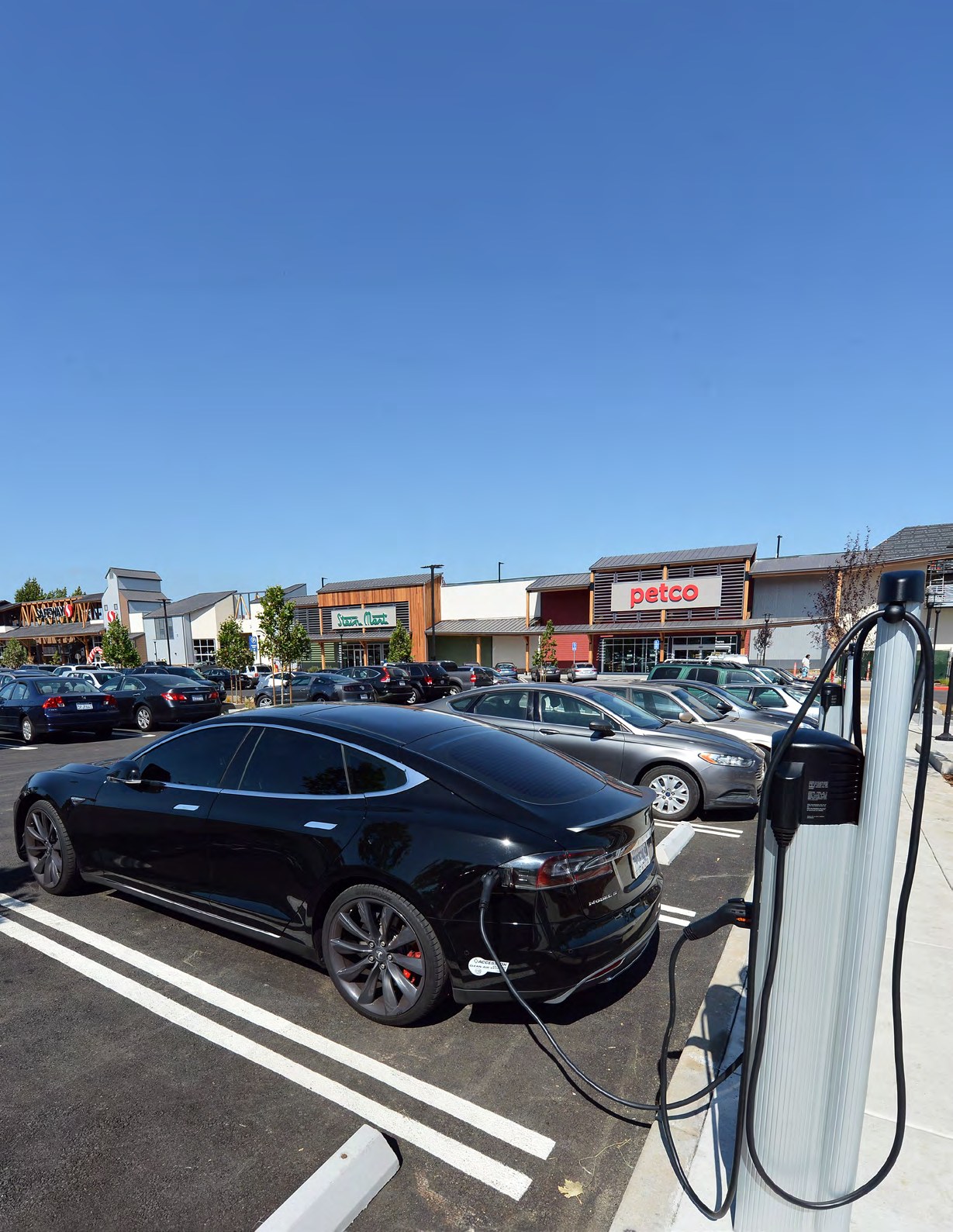
Owning an EV in the U.S. today comes with many advantages over owning an ICEV, but one crucial restriction makes it less convenient overall for many Americans: the current scarcity of charging locations. The national mission for EVs includes plans and policies that will radically accelerate the development of charging infrastructure. The aim is to make owning an EV indisputably more convenient than owning an ICEV.
If the charging network fails to keep pace with EV ownership, then EVs will actually be even more inconvenient than what some late adopters possibly already suspect. In its current mode and rate of growth, the U.S. charging network cannot keep up with a full transition to EVs on the timeline of the Mission for America’s EV mission. It may not even be keeping up with the current pace of EV adoption.63 The lack of standardization among major EV brands makes the nascent existing charging network even less useful to drivers than it could be. [and lack of maintenance]
To make owning and driving EVs more convenient than ICEVs, charging equipment must be added to millions of homes, public parking spaces, and other locations. Millions of power lines connecting homes to the grid will need upgrades. New lines will need to be run to parking lots and individual parking spaces — work that should go with projects to cover parking lots with solar panels. All these upgrades should be added with the foresight to accommodate next-generation batteries that will charge faster, hold more power, and therefore draw more current from the grid.
It's important to note that battery technology is set to witness significant advancements in the near future, improvements that are likely to make charging more efficient and further reduce range anxiety for EV owners. However, such advancements will also introduce new challenges. For instance, faster charging batteries capable of holding more power will lead to increased instantaneous power draw from the grid. This reality necessitates substantial upgrades not only to the grid itself but also to the on-site power infrastructure at charging stations. Therefore, while celebrating advancements in battery technology, we must concurrently prepare for the infrastructure demands they will bring about to ensure a smooth transition to a fully electric future.
Before we get deeper into the discussion of the challenge of EV charging and our proposed solutions, it’s necessary to distinguish between types of chargers and mention a few practical details about EV charging. Currently, electric vehicle chargers are grouped into three levels:
• Level 1: An ordinary 120-volt AC home outlet. Different models of EVs and batteries charge at different rates, but few will receive an adequate charge even overnight with a Level 1 charger. EV owners who have a Level 1 charger at home will likely experience some inconvenience if they drive even tens of miles on a daily basis.
• Level 2: An ordinary 240-volt AC home outlet — the kind heavy appliances such as clothes dryers use. A Level 2 charger will give most EVs an adequate charge overnight. Some older homes, and the power lines connecting them to utilities, are not equipped to allow an EV to charge while other appliances are drawing even moderate current. Therefore, many homes will need an upgrade to either their internal wiring, their connection to the grid, or both.
• Level 3: Fast, 400-volt to 900-volt DC chargers. These include chargers located in public areas that are manufactured and/or operated by Tesla, ChargePoint, Electrify America, and other companies. With equipment alone costing anywhere from $30,000 for a mid-range unit to over $100,000 for a highway-grade fast charger — and total installed costs reaching $200,000 per station — Level 3 chargers are expensive, and they require special high-current connections to the grid. Hence, they’re exclusively located in public spaces and commercial sites, not in homes. Using a Level 3 charger, even a high-capacity EV battery can receive close to a full charge in around an hour, adding 100-200 miles of range in 15-20 minutes. These figures reflect the current U.S. standard of 150-350 kW chargers. China, meanwhile, has begun deploying 2-megawatt chargers capable of adding 450 kilometers of range in five minutes — a technology gap that underscores how far behind U.S. charging infrastructure has fallen and how aggressively the RFC must invest in next-generation equipment.
On the vast majority of days, an EV driver will go to work or run errands with a near-full charge from the night before, and return home without having to think about charging. All that’s required is remembering to plug in the car when it’s home. Of course, certain cases call for fast public chargers. These include long trips across vast regions of the country, or even just multiple shorter trips (by a commercial driver, for instance) that require more than a single charge. Fast chargers also cover the inevitable moments when someone forgets to plug in the night before or loses power to an outage.
When it comes to fast charging, the experience will be slightly different for an EV driver than for an ICEV driver at a gas pump. Instead of a few minutes of fueling for an ICEV, getting to a near-full charge can take an hour or more, even with fast chargers. An EV driver on a long road trip will therefore need to stop periodically for 20-30 minutes, or can opt for less frequent but longer stops. In reality, drivers on long trips will make such stops anyway at restaurants, parks, rest areas, or local towns along their routes. This is why the layout of the fast-charging network will need to look different from the current infrastructure of gas stations. Larger convenience store gas stations with dining and waiting areas will likely continue to thrive as convenient spots to quickly boost range.
The other situation in which EV drivers could potentially be inconvenienced is when they are low on charge and in a hurry. In this situation, a few minutes will add only 10-20 miles of range. That would likely be enough to make it to a meeting or a school pick-up in time, but if the driver is faced with a longer trip, they will need to stop at a fast charger for longer. In the transition to the EV age, “I forgot to charge last night” could become a new common excuse for arriving late. But as fast chargers proliferate and EV range increases, this excuse will quickly be met with little sympathy.
In the U.S., the national charging network is growing but still far from adequate. As of early 2026, there are roughly 75,000 public charging stations with about 207,000 total ports — including around 68,000 DC fast-charging ports.65 Tens of millions of U.S. homes may not be ready for Level 2 charging.
The federal government's most ambitious attempt to close this gap — the $7.5 billion National Electric Vehicle Infrastructure (NEVI) program — has largely failed. Designed to fund 500,000 chargers by 2030 through grants administered by state DOTs, the program had produced fewer than 1,000 operational charging ports by early 2026, hobbled by bureaucratic delays, restrictive procurement rules, and FY2026 budget cuts of over $500 million. The lesson is clear: grants and tax credits funneled through layers of government cannot build national infrastructure at the speed this transition demands.
Building an adequate charging network will require a fundamentally different approach.
The practical differences between charging an EV and filling up a gas tank means that the charging network to support a 100% EV nation will look very different from the current system of gas stations. Gas stations will survive as convenient locations for fast charging — and our plans include financing for gas station operators and local utilities to make the switch from gas pumps to fast chargers. But most charging away from home will take place using Level 2 or Level 3 chargers where drivers typically park their cars for periods of time throughout the day. These include parking spaces at stores, malls, restaurants, and parks, and along streets and in parking garages. Since charging takes time, drivers who need a routine away-from-home charge, as well as drivers on a long trip, will likely get it while they’re spending time somewhere to dine, shop, or do errands.
As with many problems addressed by our national missions, building an adequate charging network involves a “chicken and egg” dilemma. It doesn’t make economic sense to invest in chargers when there aren’t enough EVs on the road to make them profitable. And it doesn’t make sense to invest in EVs when there aren’t enough chargers to make them convenient. Our EV mission includes tax incentives and subsidies to help overcome the dilemma by bringing the chicken and the egg into existence simultaneously.
To fully serve home charging needs, millions of homes and their connections to utilities will need major or minor modifications. In many cases, this will be as simple as installing a switching mechanism that will slow EV charging when other high-current appliances are in use. In other cases, a new power line will need to be installed between the electricity grid and the home.
Accommodating so many new public and home chargers will be a major challenge for utilities large and small. The clean power national mission includes policies to ensure they will succeed. The clean power mission calls for utilities to make comprehensive and long-term plans to upgrade their operations while switching to clean power over the 10-year timeline of the mission.
Building an adequate charging network will require dramatically scaling up the manufacture of charging equipment. Although it’s difficult to predict exactly how many chargers will be needed each year, it’s possible that demand will increase tenfold or more.
Finally, standardizing the charging network is essential to guarantee convenient access to charging for all EV owners. Company-specific charging is an impediment to a truly national charging network that is convenient for everyone. EV consumers need to know that their car will work with any charger, wherever they find it. The federal government should provide regulatory certainty that a consumer can use any EV charging station, regardless of who manufactured their car.
What the President Must Do
Executive leadership
The cornerstone of this plan to build a convenient national charging network is a fully refundable tax credit that will ensure profitability of any reasonably located charging station even during the initial build-out period when usage may be very low. This will require an act of Congress, which must go at the top of the president’s legislative agenda. If Congress fails to pass a tax credit expansive enough to accomplish what’s needed, the RFC will need to step in with investments, loans, and enthusiastic dealmaking to get the build-out rolling. The rest of the president’s job will revolve mainly around firing up public trust in the charging network that’s coming, recruiting the best leadership to lead the build-out, and backing up that leadership with all the formal and informal powers of the presidency.
Assure Americans that charging stations will be everywhere. Convincing the public that they will have no trouble charging their EVs is required for the EV national mission to succeed. The president and RFC mission team will organize and persuade business leaders, mayors, and governors to commit to building, operating, and hosting charging stations. And all this must be done as a public process, in the media spotlight, generating excitement and momentum that convinces Americans that the charging network really is being built and that charging stations will be available wherever and whenever they are needed.
One tactic to employ would be to dedicate several of the daily emergency briefings to televising public commitments from the CEOs of big-box stores, restaurants, mall chains, and charging companies to add hundreds of thousands of Level 2 and Level 3 chargers in public spaces. For more information about the daily emergency briefings, see the introductory chapters covering political strategy and presidential leadership.
As with all the national missions, creativity matters. The administration should also work with companies like Google and Apple to add features to their map applications that let drivers request charging stations at locations convenient to them.
RFC team leadership
Invest in the manufacturing of charging equipment. Several million charging stations will need to be manufactured and deployed over the next 10 years to support the transition to an all-EV future. Although it is impossible to predict precisely how many charging stations will be needed to support the transition, the annual production of charging equipment will likely need to increase by tenfold or more from current levels. Private industry is far too constrained, in both ambition and capital, to ever pursue such a large and sudden increase in investment on its own. The RFC will be responsible for overcoming these limitations and bolstering the ambition and capabilities of private industry. The RFC will achieve this through strong public leadership, spearheaded by the RFC EV team leader, and by investing billions of dollars into domestic EV charging station manufacturers.
Although the U.S. EV charger manufacturing industry is still in its infancy, it will be relatively easy to scale through direct public investment. Charging stations are simple to manufacture, requiring no advanced or new technology. Nevertheless, it will be important that the RFC take bold action to support this industry. This will include filling in supply chain gaps, such as specific types of semiconductors which have been in short supply in recent years. Much of this work will be handled in coordination with other RFC mission teams as prescribed by other national missions.
The RFC should begin the process of expanding America’s charger manufacturing industry by providing financing and investment opportunities to existing manufacturers to expand their operations. Charger manufacturers such as EVgo, ChargePoint, and Tesla have all increased their manufacturing capacity over the past few years and would likely be receptive to partnering with the RFC to continue that process. The RFC can help these companies further expand their operations through the use of loans, loan guarantees, and equity investments.
The number of companies manufacturing chargers is still relatively small, and existing industry players may not be able to build and deploy enough chargers on their own to sustain an all-EV fleet even with liberal investment from the RFC. The RFC can overcome this barrier by expanding the number of companies in the charging-manufacturing sector through two methods: investing in independent start-ups, and directly launching new companies using various methods available to the RFC.
Investing in EV charging start-ups is a simple way for the RFC to expand the size of the industry and would have significant benefits to the EV national mission. Expanding the number of companies involved in the industry would increase competition among manufacturers and incentivize them to keep prices in check. It would also lead to a more diverse supply chain for EV charging stations, reducing America’s dependence on what is currently only a handful of young companies. Investing in charging-manufacturing start-ups will likely be one more source of profit for the RFC.
If existing industry players and new start-ups cannot produce the number of chargers necessary, then the RFC can rely on a number of mechanisms to launch new ventures, all of which are discussed in detail in the RFC chapter and which are used by most of the Mission for America’s national missions:
- Government procurement contracts and Commercial Orbital Transportation Services (COTS)-style incentive contracts. This is a more direct and active approach than waiting for start-ups to arise. Here, the RFC would offer essentially bounties for companies to get into manufacturing and provision of chargers. The COTS model — the contract structure that launched SpaceX — pays companies milestone-by-milestone as they hit a sequence of benchmarks toward a new product or capability.
• Government-Owned Contractor-Operated (GOCO) programs. Here, the RFC, via spin-off charging corporations, would contract to build facilities that would then be leased to charging companies. This could be a good option if the existing charging companies, believing that demand won’t sustain at high levels past the initial build-out phase, don’t want to invest in capacity for a burst of production. As explained in the RFC chapter, this model was very popular in World War II when companies didn’t want to invest in production they believed would not last past the war.
• Setting up new publicly owned corporations. This means creating new corporations just like any other start-up, but which in this case would be owned and be directly accountable to the RFC. This option will be useful if the work of making these low-tech, low-margin chargers is so uninteresting to private business that the other options are unlikely to work. Such a move has a strong historical precedent, as the original Reconstruction Finance Corporation used many different spin-off corporations to manufacture products necessary for the war effort and for many other purposes.
The president and RFC team must refrain from worrying about the overproduction of charging equipment. It will be much worse for EV production to outpace charging deployment than the other way around. If charging deployment lags behind EV production, then EV ownership will be inconvenient or unsustainable for many Americans. On the other hand, producing more chargers than are immediately needed is simply the necessary process of investing in infrastructure for an all-EV nation and would likely keep prices for chargers relatively low. The subsidies and tax breaks described in this national mission will make private investment in charging infrastructure profitable even before usage levels ramp up.
Include the costs of EV chargers and relevant home electrical upgrades in the Upgrade American Loan Program. The Upgrade America Loan Program, introduced in the national mission for upgrading homes and buildings, is a financing program administered by the RFC that offers American taxpayers a combination of grants and low-interest-rate loans to decarbonize and enhance the efficiency of their homes and vehicles. Every American is entitled to a small amount of grant money per year, with the total amount dependent on their yearly household income. The available loan amount is universal across all income levels and is offered at a low interest rate so that all families can participate equally. The grants and loans can be used to make qualified purchases that contribute to home or vehicle decarbonization. For further information on the details of the program and a comprehensive list of purchases that qualify, please refer to the chapter on the national mission for upgrading homes and buildings.
The costs of installing EV charging equipment at home remain high even with existing and proposed incentives. The additional grants and financing included in this program will make them more affordable for all Americans. In particular, the low-interest-rate financing options will be more appealing to low- and middle-income consumers who today cannot access credit or who only have access to high-interest-rate loans. The financial support offered through this program is not meant to replace existing incentives but, instead, to complement them for consumers who need extra assistance to equip their home with charging stations.
Finance the development of public charging stations at major businesses. The RFC should help finance the deployment of public Level 2 and DC fast chargers at businesses across the country. This task differs from many of the RFC’s other investments because it is not about creating new manufacturing capacity or businesses but about working with companies across various industries to convince them to buy and deploy a product. Low-interest-rate loans will likely be the best mechanism to accomplish this goal.
The RFC should begin this process by prioritizing businesses with a national footprint and high levels of daily traffic. An excellent example of such a company would be a supermarket chain like Walmart. An average Walmart Supercenter has 10,000 car visits per day. As of 2025, there were roughly 3,560 Walmart Supercenters in the United States. Suppose the RFC financed a deal that included 12 new charging stations at every Walmart Supercenter. That alone would add more than 42,000 stations — a roughly 25% increase in the number of public EV charging stations in America. If the RFC repeated this process at other supermarket chains like Target, Costco, Kroger, and Publix, then the RFC could double the number of public EV chargers exclusively through deals with supermarket chains. There are many other examples of businesses with high levels of daily traffic, including pharmacy chains such as CVS or Walgreens, national restaurant chains such as those owned by Darden Restaurants, fast food chains like McDonalds, and brick-and-mortar retailers such as Lowes or Barnes and Noble. A deal with any of these companies would dramatically increase the number of EV chargers in America and would distribute those chargers across nearly all 50 states.
The RFC should offer loans to all eligible businesses to add chargers, but it may have to use some strategy to kickstart deals in a way that avoids having to create one with every corporation considered a high-traffic business. Most companies will begin to invest in public charging stations on their own due to a rise in EV ownership and the generous subsidies introduced in this national mission. Having easily accessible charging stations will also become an important part of attracting customers to their business. Were the RFC to strike a deal with one or two large grocery chains to build thousands of public charging stations, most other chains would begin investing in their own charging stations out of a sense of self-preservation. If the RFC is smart about whom they strike their initial large deals with, they could likely crowd in billions of dollars of investment into public charging stations from private corporations around the country through just a few deals with strategically picked companies.
Overcome any hesitancy from business leaders through personal leadership and savvy dealmaking. Even though we expect the RFC to have an easy time convincing companies to invest in public charging stations, leaders at the RFC need a backup plan for handling unexpected opposition. The RFC’s exact course of action will, of course, vary depending on what the source of hesitation is. Nevertheless, we find it prudent to provide an example of one way the RFC could overcome opposition from business leaders.
The most likely objection companies will have early in the process is that they do not want to invest in public charging stations because not enough of their customers currently have EVs. They may believe that the national mission for EVs will be unsuccessful, or that they should wait until the mission is further along before investing hundreds of millions of dollars into new charging stations. This thinking perfectly aligns with the mindset of “short-termism” that plagues corporate decision-making. Many corporate leaders would rather be behind the curve than ahead of it to avoid even slightly scaring shareholders. The RFC could employ many tools to overcome this resistance.
First, the RFC will need to lean on the personal leadership of the president and the leader of the RFC EV team to convince industry leaders that the federal government is committed to the success of the national mission for EVs. This is a good example of why it is so important for the leader of the EV team to be a respected individual from the auto industry. Such an individual would have significantly more credibility when making this case to their peers than someone whose credentials are purely political or bureaucratic.
The RFC can also employ creative financing techniques to incentivize companies to invest in new charging stations, even when they may resist at first. Suppose companies are overly committed to a “wait and see” approach to building public charging stations. In that case, the RFC needs to work on a deal that can help ease the short-term concerns of business owners while still getting them to commit to the long-term investments required to build a national charging infrastructure. One potential deal could involve the RFC promising a zero or near-zero percent interest rate for the first five years of the loan. This would minimize the short- and medium-term costs associated with building new charging stations and reassure shareholders that they have plenty of time for their investment to pay off.
Work with the DOT and state leaders to identify any areas lagging behind in charging deployment. It is logical and inevitable that some communities will have more public chargers than others. Large metropolitan areas with lots of drivers will always have more public chargers than small rural areas with fewer drivers. However, every community must have an adequate number of public chargers to sustain a nearly 100% EV fleet. The leader of the RFC EV team must regularly meet with leaders from the Department of Transportation and state governments to identify any communities where a lack of public charging stations is preventing widespread EV adoption. Once the RFC has identified a community that has an insufficient number of public chargers, they must immediately begin working with private and public sector leaders to formulate an investment plan for that community.
Broker deals between EV charger manufacturers and large lot owners. As discussed in the presidential leadership section, the president will use the launch of the EV national mission to announce initial agreements between EV charging companies and large commercial parking lot owners such as supermarkets or national restaurant chains. Once the excitement from these initial announcements begins to fade, the RFC will be responsible for continuing the work of brokering new deals between the charging companies and private lot owners.
The RFC should generally allow private companies to purchase EV charging stations from any provider they want, but there are times when encouraging partnerships between lot owners and specific manufacturers may be beneficial. Imagine a scenario where a charger manufacturer is considering investing in a new factory but is unsure whether there will be adequate demand for the charging stations they plan to build. If the RFC decides the factory would be in America’s national interest, they could facilitate a deal between the manufacturer and a large supermarket chain to get the project over the finish line. Both parties would ultimately have to agree to the terms of the agreement. Obviously, the RFC would never foist a deal upon unwilling parties, but it can always help make one seem more agreeable through generous financing terms or public support. This type of agreement would be a win for all parties involved. Then the charging company could go forward with their new investments, the new factory could employ hundreds or even thousands of workers, the lot owner would receive new EV chargers, and Americans would have access to more public charging stations.
Encourage the use of microgrids with public charging stations. A microgrid is a small localized grid containing distributed energy sources directly connected to a load. In the context of microgrids for EVs, the distributed energy source would be solar panels paired with small-scale storage, and the load would be the EV chargers. Microgrids can operate entirely independently but can also be connected to the local grid when necessary. Although some public EV chargers have used microgrids, the practice is still relatively rare. The RFC should encourage, whenever possible, the use of microgrids for lots containing a large number of public fast chargers.
The benefits of microgrids paired with fast chargers are enormous. Microgrids can dramatically reduce grid congestion and keep energy prices low by allowing EVs to charge off-grid. Microgrids would be uniquely helpful in workplace parking lots, where hundreds or thousands of workers across a city would likely plug in their EVs at roughly the same time. If these EVs drew power directly from the grid, it would create a sudden spike in energy consumption that would drive up electricity prices. This problem can be avoided by using electricity from generation microgrids equipped with solar panels and batteries. Not only would the electricity used for the charging station be cheaper, but it would also keep prices low for everyone in the area by reducing the total demand for electricity from the grid. Microgrids have the added benefit of driving more investment into American-made solar panels and batteries.
The RFC could encourage microgrids by offering more favorable financing and investment terms to companies who pledge to build microgrids alongside their EV fast chargers. An example of such a strategy would be a lower interest rate or a longer repayment period for companies who invest in microgrid technology when building new charging capacity. The RFC will likely find it easy to convince companies to invest in microgrids. The economic benefits of microgrids to charging operators are very apparent, and the policies introduced in the national mission for clean power make it very affordable for companies to invest in new solar energy and battery technologies.
Coordinate with other RFC teams to ensure that infrastructure upgrades to a given area are done efficiently. The Mission for America will require local communities to embark on more infrastructure upgrades than they have in a generation. One individual street in a major city may need to do multiple projects throughout the duration of the Mission for America. These could include upgrading electrical infrastructure to accommodate home electrification, installing EV chargers on sidewalks, restructuring roads for bike lanes or new public transport options, and more. If communities approach these projects on an individual basis rather than as part of a comprehensive project, they will inevitably have to return to this street multiple times to do each upgrade. This piecemeal approach would be deeply inefficient, increase the total costs associated with the Mission for America, and be disruptive to the lives of community members.
Whenever a RFC team funds a new project in a given community, they should coordinate with other RFC teams and local officials to figure out whether other upgrades can be done concurrently with the new project. This process will require a team within the RFC whose whole job is to facilitate this level of coordination. While the RFC has no authority to override local decisions, this level of coordination and dialogue can promote a more efficient strategy for implementing infrastructure projects. For more information on this coordinating team, please refer to the chapter on the Reconstruction Finance Corporation.
White House leadership
Require federal facilities to install American-made EV charging stations. Even before Congress acts, the federal government can begin installing EV chargers at federal buildings, interstate rest stops, national parks, and all other federally owned properties. This will simultaneously support the domestic manufacture of charging equipment and add chargers to some of the most visited spots in the country. The federal government owns 350,000 buildings, located in virtually every major city and county in the country, hundreds of interstate rest stops, and 423 national parks.67 The federal government should stagger its purchases of EV chargers throughout the 10-year timeline of the Mission for America to avoid putting too much pressure on suppliers early in the process. By adding U.S.-made EV chargers every year, the White House will single-handedly grow the nation’s charging network substantially, as well as helping to grow domestic manufacturing capacity.
More than two million people work in federal buildings, with many millions more visiting them every year.68 Equipping federal buildings with EV chargers will make federal workers more likely to purchase EVs. And as we cover in greater depth below, it will also be a perfect testing ground for vehicle-to-grid (V2G) bidirectional charging. This will allow EV owners to be compensated for providing much-needed energy storage to the grid. Charging stations at some federal buildings could be made available to the public as the charging network is still in its early stages and chargers are still relatively rare.
America’s national park system is not limited to remote parts of the nation. Our 423 national parks, monuments, and other protected areas are distributed across every state, with many located in urban and suburban areas. Together, they receive around 300 million visitors per year.69 Currently, a vacation to visit national parks is exactly the kind of use case that prevents many Americans from choosing an EV as their family car. Installing EV chargers will help familiarize Americans with EVs, as well as providing charging stops in both populated urban and suburban areas and some of the most remote locations in the country.
Federal interstate highway rest stops are another important location in which to build charging stations. We deal with this in depth in the congressional legislation section below because adding privately operated chargers to rest areas will require a change in law. This policy must work in tandem with our proposal to equip federal properties with distributed renewable energy resources and on-site energy storage, introduced in the national mission for clean power. Together, these policies will guarantee that employees and visitors at federal buildings will have access to affordable clean energy to charge their EVs.
What Congress Must Do
Congress has a major role to play in creating sufficient incentives to spur businesses to install fast chargers everywhere drivers will need them. The goal of the legislation outlined below is to virtually guarantee that businesses will profit from installing charging stations in any reasonable location, and especially that charging stations will be profitable during the initial period of the transition when usage will still be low.
Restore and expand the Alternative Fuel Vehicle Refueling Property Tax Credit. The Alternative Fuel Vehicle Refueling Property Tax Credit was a tax credit included in the Inflation Reduction Act (IRA) that supported the installation of fueling infrastructure using electricity, liquefied hydrogen, natural gas, propane, or biodiesel.70 Originally passed in the Energy Policy Act of 2005, the credit ran until 2021 before the IRA extended it with some expansions as well as some limitations. The IRA expanded the payout to 30% of the cost of investment, capped at $100,000 for businesses and $1,000 for homeowners per charger installed.^71 It also added bidirectional charging equipment as an eligible purchase.72 Unfortunately, the IRA severely limited eligibility to chargers built in low-income or rural areas.73 The credit was subsequently terminated by the One Big Beautiful Bill Act along with other IRA clean energy provisions.
When Congress restores this credit, several expansions and modifications will be needed to make it capable of driving investment on the scale required to build a truly national charging network that ensures convenience for all EV drivers in virtually all circumstances.
To maximize the effectiveness of the revived refueling tax credit, we recommend the following changes:
Make the credits fully refundable. The original credit was not fully refundable, meaning individuals or companies could claim a benefit only as large as their annual tax liability.74 Making the credit fully refundable will increase the payout for many applicants and will increase the number of chargers that businesses and consumers can afford to install.
Expand the tax credit from 30% of costs to 75% per charger, with that rate declining each year on a schedule to 30%. While it is important to maintain some cost to businesses to prevent building of chargers where they are unnecessary, a much deeper subsidy is needed to spur businesses to build an adequate number of chargers in their lots. Even this level of subsidy will not be enough on its own. As mentioned above, the RFC must offer near-zero interest-rate loans to cover the remaining costs of the chargers. A deep, fully refundable tax credit is needed to allow the RFC to convince the major national retail and restaurant corporations, as well as small and local businesses, to build at the level required. Subsidies should not last forever, which is why we believe the rate should be reduced over the term of the mission. Eventually, providing charging must either become a profitable revenue source for businesses or should become so cheap and easy to provide that it is just another cost of maintaining a parking lot.
Make the tax credits be paid out over a period of five years, with a condition set that the chargers must remain operative during their lifespan. This is necessary to combat the problem of chargers being forgotten and falling inoperative or being obstructed by non-electric vehicles or other barriers. During the initial years of the transition, many chargers will not be in frequent use, so there might be a temptation to ignore them when they break. Solving a “chicken and egg” solution such as the EV transition requires that drivers see that charges are available everywhere, even before they buy an EV — this is a necessary precondition for millions of drivers to make that decision to buy their first EV. They need to hear from their EV-owning friends how easy it is to find chargers everywhere. They need to not hear that everywhere their friends go, they only find broken chargers or charging spaces occupied with gas-powered cars.
Add a 100% fully refundable tax credit for charger maintenance, also declining on a schedule over the course of the mission. This should probably be kept at 100% for at least the first few years of the mission.
Eliminate the payout cap for public fast chargers. Level 3 chargers must be available everywhere drivers will need them, but they are considerably more expensive than Level 1 and Level 2 chargers — often costing more than $80,000 when including equipment, labor, and money spent on the regulatory process.75 Eliminating the payout cap for fast chargers will help close this gap and encourage businesses to consider installing fast chargers instead of defaulting to cheaper options.
Drop the restriction to rural and low-income areas. While giving special focus to building charging equipment in low-income and rural communities is warranted, it should not come at the expense of the rest of the country. This is especially important due to the large number of chargers that will need to be deployed in every part of the country — especially in urban and suburban areas. Other policies in this section will detail plans to support building chargers in low-income and rural communities without needing to trade off with charging infrastructure elsewhere.
Extend the credit for 10 years after passage. Congress should ensure that the program exists for the duration of the overall mission to decarbonize American society.
Require that to be eligible for these tax credits, any chargers that require payment by users will allow standard one-tap payments with credit cards or payment-enabled phones and other devices.
Passing this modified and expanded version of the Alternative Fuel Vehicle Refueling Property Tax Credit will speed up the installation of both public and residential EV charging stations. The modified credit will drive billions in private investment into public and residential charging over the course of our EV mission. Homeowners will be able to pair this expanded, fully refundable credit with the grants and financing available under our Upgrade America Loan Program, covering all or almost all the costs of chargers. Businesses will be incentivized not only to invest in more chargers overall but also to begin focusing more investment on the fast chargers needed to give Americans confidence in the national charging network. This tax credit alone is not enough to create the national charging network needed to support the millions of new EVs that will be on the road within a decade, but will be an important tool to encourage private business and homeowners to be part of the solution.
Create a grant program within the DOT that provides support for adding EV charging infrastructure for states. Congress must create a program within the DOT to provide consistent funding for states, counties and municipalities to build EV charging infrastructure. A complete, reliable and resilient charging network will benefit from having as many benefactors and builders as possible. States, counties and municipalities should be shored up as additional providers of charging infrastructure on top of all the other mechanisms we are proposing. This funding will be essential for adding chargers to several important kinds of locations:
Street parking in cities and downtowns for visitors.
Street parking in cities and downtowns for residents.
Municipal, county and state buildings.
Public schools, colleges and universities.
Public spaces such as parks.
State highways.
Anywhere else states and municipalities deem needs a boost in charger development.
Street parking in cities and downtown areas is critically important for the health of downtowns. If it suddenly becomes very inconvenient to live in a downtown area simply because people can’t charge their cars, this could be another blow to the health of cities. On the other hand, if chargers are conveniently and amply located everywhere they are needed in cities, this could provide a significant boost to cities’ efforts at post-COVID revival.
Grant funding for EV charging was offered to states in the Infrastructure Investment and Jobs Act (IIJA), but only for the fiscal years of 2022 through 2026.76 This new grant program will need to be funded for the full decade of the mission to ensure that the national charging network is consistently expanded as the United States progresses toward an all-EV future. The size of the grant received by each state should be influenced by the state’s population and EV usage. The DOT is well equipped to handle such a program, as they already issue many billions of dollars in formula grant funding to the states each year.77
The new grant program must be designed to give each state flexibility in how they use their funding. Every state will have their own needs and special circumstances when building their charging network. The aim of this program should be to empower each state to find solutions that serve their needs, rather than dictate one national strategy for state-based charging station deployments.
Access to grant money will be contingent on states submitting deployment plans to the DOT. Although states should have considerable leeway in deciding how to spend the grant funding, each state must prove that they are using the funding to work toward a charging network capable of supporting an all-EV future. In particular, states need to demonstrate that charging will be accessible and convenient to all drivers across the state, and that chargers installed through state programs will generally be financially viable when federal subsidies are phased out. The goal of this program is not to create a permanent dependence on the federal government, but to equip the states to quickly build an equitable, sustainable charging network they can maintain for decades to come.
Create a grant program within the DOT to help build EV chargers in underserved areas. The DOT should provide additional formula grant funding for deploying chargers in underserved areas, with a specific focus on low-income and rural communities. The IIJA contained a similar provision, with $1.25 billion earmarked for underserved areas to build EV infrastructure.78 We recommend expanding upon this program to create a subsidy capable of fully supporting EV charging deployment in underserved communities.
Private investment and the generic DOT formula grant for charging infrastructure will not be enough to build out charging-capacity areas with low initial EV-use. Private investors will focus their efforts on areas where EV-use is increasing the fastest, and the other programs introduced in this solution aim to invest in charging stations that will function without permanent government subsidies. Many rural and low-income areas may not meet either of these conditions.79 In some places, EV charging may not be profitable because demand will never hit levels required for profitability.80 Nevertheless, EV chargers will still be necessary in those communities to support those who do own an EV and travelers who may be passing through.
Building rural EV charging infrastructure is analogous to the problem of rural electrification in that it is often not profitable to provide electricity in rural locations at affordable prices. This problem was solved by allowing utilities to function as regulated monopolies that were obligated to subsidize rural service provision. However, in contrast to utilities, the EV charging industry does not trend toward monopolization. Therefore, we recommend that this service must be paid for with public transportation funds.
Earmark funds for the repair and maintenance of charging infrastructure in underserved areas. Currently, chargers installed in locations with low EV usage, often thanks to government grants, are quickly abandoned or fall into disrepair.^81 Moreover, a large number of chargers built in rural or low-income areas have fallen into disrepair or are non-functional.82 States and private companies do not prioritize maintaining these chargers because they are often the least used within a state or network. This not only disincentives members of the community to buy EVs, as they will assume that the charging companies have abandoned their community, but also creates a reliability issue for EV drivers in that community. The charging stations deployed in these areas will need a subsidy designed to provide consistent economic support for deploying and maintaining the charging stations until EV-use becomes prevalent in these communities — which could be many years after it becomes prevalent in other parts of the country.
Therefore, we recommend that funds from DOT formula grants for underserved areas be split into two categories: new builds and repairs. This will help maintain charging stations even when they are not being used. Designing this grant to have a portion of the money go toward maintaining existing charging infrastructure will mitigate the problem of abandoned and unmaintained EV chargers.
Require that utilities plan for an all-EV nation in their Decarbonization Pathway Studies. In the national mission for clean power, we introduce the concept of Decarbonization Pathway Studies (DPS). A DPS is a new review and planning process that all utilities will undertake as part of the Clean Energy Standard (CES) to estimate future electricity demand, and to create plans for how they will meet it with 100% clean power within a decade. The Decarbonization Pathway Study is, in effect, a national version of the Integrated Resource Planning (IRP) processes that 28 states already mandate for their utilities.83 In many states and cities, these processes have accumulated a proven track record of success. The plans made in this process are not legally binding, but they help identify needs and weaknesses for the benefit of the local utilities and policymakers.
Millions of new EVs coming onto the roads over the coming decade will dramatically change the needs and vulnerabilities of utilities. The DPS will prompt utilities to assess these changes in advance and plan for them. The most pressing change that utilities will need to account for is the total increase in electricity demand required by new EVs, as well as the countless new high-current connections to charging facilities, businesses, and homes that will be required to accommodate EV charging.
Some estimates predict that a full switch to EVs alone will cause up to a 25% increase in electricity consumption.84 Utilities, therefore, not only will need to generate significantly more clean power to accommodate this increase in demand but also will need to make other upgrades, such as expanding their transmission and distribution capabilities.^85 Individual utilities will also have their own localized concerns, such as adjusting local regulations to allow them to manage EVs as a source of energy storage.86 Completing a DPS will familiarize each utility with the potential problems and bottlenecks they will encounter as the country decarbonizes its energy and transportation sectors. It will also facilitate greater coordination among all levels of government in solving them, and will allow utilities to better tap into current assistance programs and the many new ones created by the Mission for America.
Require that Decarbonization Pathway Studies include plans for adopting managed charging strategies to mitigate grid stress and high energy costs. Managed charging strategies reduce stress on the grid by making consumer and business charging behavior more efficient.87 Managed charging strategies include time-of-use rate setting, staggered charging in large commercial EV fleets, vehicle-to-grid integration, and more.^88 Managed charging is best implemented at the local level where decision makers can assess the needs and constraints of their own community. The local energy generation mix, number of EVs, type of EVs, and local energy demand patterns are examples of variables that utility managers will have to consider.89 The types of strategies deployed by a suburban community in the Southwest powered mostly by solar power and with high EV penetration will be different than the ones deployed in a community in the Great Plains with high levels of wind generation and fewer vehicles in relation to available power. Well-organized, properly managed charging benefits everyone; utilities can reduce electricity costs, transportation costs, and emissions, as well as improving air quality, increasing energy efficiency, promoting multiplier benefits by increasing the circulation of capital within communities, and enhancing energy security by optimizing existing grid assets and V2G adoption.90
Allow privately owned EV charging and expand parking at federally owned interstate rest areas. As discussed in the executive action section above, interstate rest stops are ideal homes for EV charging stations because of their convenient locations for drivers on long trips, existing infrastructure, and familiarity among drivers. However, some reforms are needed before EV chargers can be deployed at the more than 1,400 rest stops across the country.91
Currently, regulations dating back to the Federal Aid Highway Act of 1956 forbid the commercialization of interstate rest stops.92 This has historically been applied very broadly to mean that no commercial activity can occur on interstate rest stop property, including anything from restaurants to souvenir shops. The regulation was designed with the intent to prevent essential transportation infrastructure from being used to support state monopolies.93 Attempts at changing these regulations have been met with fierce opposition by associations of private truck stop and gas station owners who fear competition from the government. Congress will need to create a carve-out in these regulations to allow private EV chargers at interstate rest stops, ideally connected to support truck stops and gas station owners as they transition to add their own charging infrastructure. This would not be an unprecedented move, as exceptions have already been made for vending machines, lottery ticket machines, and state-owned tourism information.94 This simple regulatory adjustment would enable the executive order discussed above and help to create thousands of easily accessible EV chargers across the country.
In addition to this regulatory change, interstate rest stops will need further modernization to be ready for sufficient numbers of EV chargers. The most pressing concern is for Congress to invest in expanding the number of parking spots available at most rest stops. Many rest stops already face a shortage of parking spots, and turning them into hot spots for EV charging will only make the situation worse.95 Solving the shortage by enlarging parking areas at rest stops will require appropriation from Congress for the Federal Highway Administration (FHWA) at the DOT, with firm deadlines for the upgrades. These upgrades can take place concurrently with the deployment of EV charging stations. Other upgrades to make rest areas more comfortable for drivers as they charge their vehicles should also be considered by Congress and funded appropriately.
Create a new Paycheck Protection Program (PPP)-style loan program through the Small Business Administration for gas stations, truck stops, and other businesses affected by the EV transition. Congress must authorize a new Gas Station Conversion Loan program within the Small Business Administration (SBA) in order to offer low-risk loans to gas stations to prepare for an all-EV future.
America’s gas stations are unprepared for a transition to EVs, and some experts question whether gas stations will even have a future in the EV era.96 We believe that they should be given a chance. Historically, entrepreneurs very often surprise doomsayers when given access to capital with which to experiment and adapt — and even when they are not. Considering that most gas stations don’t actually make most of their profit from selling gas, their prospects in the EV era objectively don’t seem nearly as dire as one might expect.97 The Gas Station Conversion Loan program aims to give gas station owners the opportunity to participate in the EV transition and protect an industry that is a cornerstone of so many neighborhoods and towns.98
Like several loan programs we recommend in other missions, this loan program should be modeled on the Paycheck Protection Program loan program that was rolled out during the COVID-19 pandemic. Basing the program on the PPP capitalizes on institutional knowledge and experience at the SBA and participating private banks. Problems with the PPP can be fixed now that they are better understood. The principle of widely available loan forgiveness according to appropriate conditions applies perfectly to the case of gas stations upgrading to provide electric charging. It is impossible to predict which businesses will succeed. But rather than tell whole categories of business owners to not even try, a PPP-style program allows entrepreneurs to decide for themselves and experiment with many different business models, or even get into a totally different type of business.
Gas stations may come to be used as a convenient place to pull over and pick up some extra range quickly when one’s battery is running low. Many drivers will need quick charges at unexpected times, for which gas stations equipped with fast chargers could be perfect. Drivers without reliable access to home charging could rely on gas stations as a place to charge up a couple of times per week while getting a cup of coffee, a sandwich, or a lottery ticket.
Owners will need to explore new ways to engage customers during long charging times. Most customers do not spend much time at gas stations when they go to refill their car; Americans average three minutes pumping gas and enter the gas station only 44% of the time.99 Furthermore, most gas stations do not make most of their money from selling gas; rather, they make most of their profit selling other items inside the store.100 Fueling is often a loss leader for gas stations. The Gas Station Conversion Loan program will give financial support to stations who are experimenting with ways to attract and accommodate drivers during long charge times. Gas stations that have been early adopters of EV charging points have already begun to experiment with ways to engage customers during this extended period of time. Some have expanded their food offerings and added additional seating while others have added outdoor amenities such as gardens or playgrounds.101 It is too early to know what strategies work best, and many depend on the location of the gas station.
Not every gas station will survive the transition to EVs, but those that do will play an important role in the national charging network. Gas stations will continue to be relevant as charging sites for three reasons. First, they are already placed in convenient locations for drivers. Gas stations have been strategically built to maximize the number of people who visit every day. A few examples of common locations include near highways, shopping centers, grocery stores, and apartment complexes. Transitioning these stations from gas pumps to EV chargers can help guarantee that public charging stations are placed in geographically convenient locations for most drivers. Second, keeping gas stations in place will make the transition psychologically easier for many Americans. Americans are already in the habit of going to the gas station at least once a week. Allowing people to continue this habit will provide a sense of continuity and ease during the transition. Highly visible gas stations with newly equipped charging stations will help mitigate concerns over range anxiety as drivers know where they need to go to refuel. Finally, gas stations employ more than 140,000 workers across the country, many of whom are part of the working class, and it is worth saving these jobs wherever possible.102
These loans will lessen the financial burden placed on gas station owners as they begin adapting to the needs of an all-EV business model. As EV adoption ramps up, replacing gas pumps with EV chargers will no longer be seen as a gamble but rather as a necessary upgrade to serve the needs of consumers.
Require a standardized charging network. The EV charging landscape has rapidly consolidated around a single standard. In 2023, the industry coalesced around Tesla’s connector design, now formalized as the SAE J3400 North American Charging Standard (NACS). Every major automaker has committed to building NACS ports into new vehicles, and Tesla has opened its Supercharger network to nearly all EV brands. Congress should codify this convergence by requiring all publicly funded chargers to support NACS and by directing DOT to update NEVI requirements — which still mandate the now-superseded CCS1 connector — to reflect the new standard. During the transition period, Congress should also ensure that adapters remain widely available and affordable for owners of older CCS-equipped vehicles, so that no EV driver is stranded by the connector shift.
Ensure easy payments for charging. NEVI standards already require federally funded chargers to accept contactless credit and debit cards without requiring app downloads or network memberships. But these rules cover only a fraction of the national charging network. Congress should extend contactless payment requirements to all publicly accessible chargers and accelerate the adoption of Plug and Charge technology (ISO 15118), which allows the vehicle itself to handle authentication and billing automatically when plugged in — no card tap, no app, no friction. The goal should be a charging experience as simple as pulling into a gas station: plug in, charge, and go.
The goal should be a charging network free from fragmented payment systems, which currently necessitate individual accounts and separate applications. Instead, drivers should have the assurance that they can use any charging station knowing that, if payment is required, a simple tap of their card, phone, or watch would complete the transaction swiftly and securely.
Companies should be encouraged to introduce additional payment solutions and proprietary applications, with the option to incorporate their own discount schemes and rewards programs. However, the standardized option of one-tap payment should remain universally accessible to ensure consistent user experience and convenience.
Require new vehicles and chargers to have Vehicle-to-Grid bidirectional capabilities. Congress should pass new vehicle standards mandating that all EVs produced after 2029 have vehicle-to-grid (V2G) bidirectional capabilities. V2G is the capacity for an EV and connected charging equipment to transfer power from the car battery to an external system such as a home or directly to the utility grid.106 Our proposals insist that this capacity come with intelligent controls that allow owners to determine when and how power in their batteries are used, and to be compensated for it. The federal government has the power to regulate EV batteries under the Joint Office of Energy and Transportation and the Departments of Transportation and Energy, and has made similar regulatory moves in the past.107 Ensuring that EVs come with V2G as standard, and that utilities and homes are ready for it, is an important step toward building a 100% clean power grid while dramatically increasing power delivery. Hundreds of millions of EV batteries connected to the grid bidirectionally is exactly the energy storage solution needed to make this possible.
Bidirectional charging functionally turns every EV into a battery capable of bringing cheap electricity and stability to the grid, benefiting both utilities and consumers. Taken together, millions of EV batteries would supply power and give utilities significantly more flexibility during times of elevated demand or restricted supply.108 Utilities will save money from having to build less power generation, batteries, transmission, and other associated infrastructure.109 Consumers might receive up to $100-$300 per year per vehicle through the rebate when they sell electricity back to the utilities.^110 Intelligent controls would ensure that everyone still has the charge they need to get to work in the morning.
Regulations governing how bidirectional charging is implemented are usually decided by local governments or utilities, with a lot of variation from place to place.^111 It would be unwise to try to dictate how utilities should handle V2G, given that it is so new. Utilities and consumers need to be free to experiment with different arrangements. Standards may emerge during the span of the MFA missions, or it may turn out to be unimportant to have a uniform national system of V2G consumer-utility arrangements.
What’s important is that the legislation that Congress passes enshrines the principle of customer control: that with every EV charging connection — whether plugged in at home, at work, or at a retail parking lot — an EV owner should be in control. For example, ideally, a driver should be able to set requirements that their battery retain a certain percentage charge at specific times — say, 50% in time to go to work at 7:30 AM and in time to go home at 5:00 PM. If the driver has a charger at home and at work, then the local utility could add to the driver’s battery when there is a surplus of power — for example, at night when the wind might be blowing hard and usage is low — and draw it down from EV batteries when demand is high. Drivers should be able to set a minimum price for the power drawn from their battery, and both minimum and maximum percentage charges allowed for their batteries, as EV drivers usually avoid charging to full capacity to preserve battery life.
Solution 3: Providing Sufficient Consumer Incentives and Subsidies to Get to 100% EVs in 10 Years
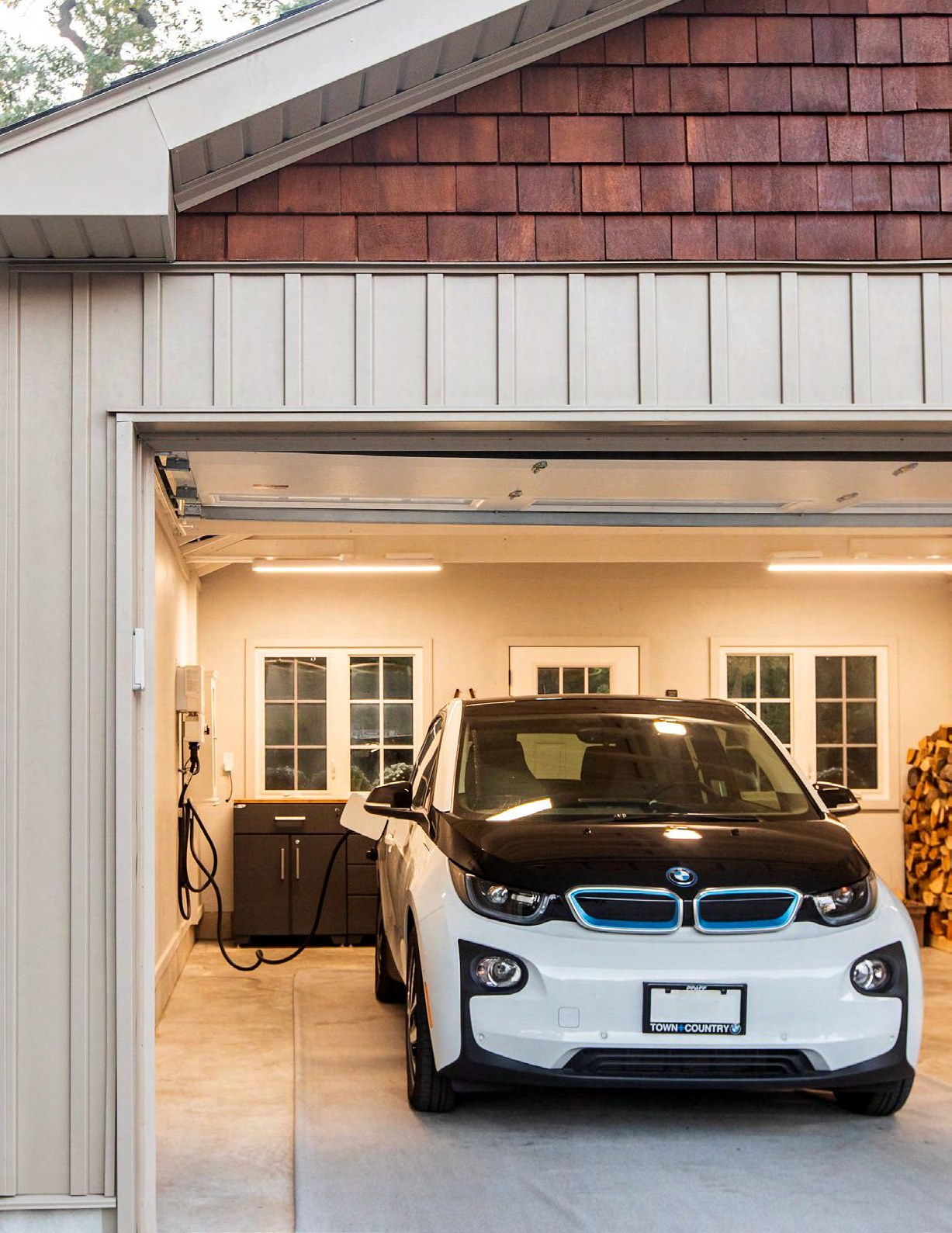
The Challenge
Millions of Americans will need to be convinced to buy an EV if there is to be any hope of decarbonizing America’s transportation sector and restoring the domestic auto industry. Luckily, most Americans will need little convincing. Recent surveys have found that around 71% of Americans are interested in buying an EV.112 However, although 71% of Americans would like to own an EV, very few of those people plan on acting on that desire in the near future. Some causes for hesitation, such as wait times for EVs or insufficient charging infrastructure, will be resolved by the policies introduced in prior parts of this national mission. But other concerns will be trickier to fix, and consumers will need extra assurances to feel confident in purchasing EVs. More enticements will be needed to persuade the 29% of Americans with no current desire to purchase EVs. Strong public leadership and consumer incentives will be required to make every American happy to switch to EVs. We have identified three challenges related to the cost of EVs that consumer incentives will need to address to get to an all-EV nation.
The first challenge is making EVs more affordable than ICEVs outright. Most EVs are still not competitive with ICEVs in terms of cost, and the high up-front cost of a new EV is one of the biggest obstacles to public acceptance. Up-front costs alone do not show the true costs of owning a vehicle, however, and the total lifetime costs of an EV are often lower than those of an equivalent ICEV.113 Nevertheless, many consumers will focus exclusively on the up-front costs when deciding between an EV or ICEV.114 Many simply cannot afford that higher up-front cost, and do not have access to adequate financing. Consumer incentives will need to reduce the up-front costs of EVs to below those of ICEVs to guarantee that Americans will always purchase EVs when given the opportunity.
Our proposals do not exclusively rely on consumer incentives to make EVs more affordable than ICEVs. Other policies included in this national mission will reduce the costs of manufacturing new EVs through tax rebates for new production and assistance in resolving supply chain bottlenecks. Consumer incentives will be responsible for the final cost reductions necessary to make EVs not just comparable to ICEVs, but a significantly better deal for most Americans.
The second major challenge is encouraging Americans to buy an EV when they would otherwise not be in the market for a new car. Roughly 17 million cars are bought in America each year.115 At the current rate, assuming every new car sold is electric, it would take around 16 years to replace the 284 million ICEVs in America. The turnover rate will need to increase dramatically as EV production ramps up for the country to reach the goal of getting close to 100% EVs within a decade, especially since most car sales will not be EVs in the early years of the program. Increasing the total number of cars sold each year will require millions of Americans to purchase cars who would otherwise not, either because they cannot afford to do so or because they have no desire for a new car. Therefore, the government will need to focus not only on cost reduction but also on developing policies that will reward Americans for selling their ICEVs early. This is one problem that can be accomplished only through strong cash incentives to switch cars.
The final concern is preventing a flood of used ICEVs from coming on to the market all at once with plummeting prices. Without a policy intervention, millions of used ICEVs will enter the resale market as Americans begin to switch to EVs, dramatically increasing the total supply of used vehicles and decreasing the price of used ICEVs.116 Any substantial decrease in the cost of a used ICEV will undo progress made in closing the EV-ICEV price gap, and could disincentivize consumers from buying EVs. It would also disadvantage owners of ICEVs who will need the revenue from selling ICEVs to purchase EVs. Many could find themselves under water on their car loans, with the resale value of their ICEVs falling below the payoff amounts of their loans. To avoid this problem, a program will be needed to buy back old ICEVs while maintaining their prices both in the interest of making EVs attractive as well as giving ICEV owners a fair trade in their first EV purchase. Policymakers will have to create a program that can be responsive to the state of the used-car market, and which is capable of increasing or decreasing the scope of the program in response to the number of used ICEVs on the road and up for sale.
If anyone complains about the government intervening to artificially buoy used auto prices, they should be reminded that this is exactly what the federal government does with bad loans and other junk assets for Wall Street on a regular basis — including recently to the tune of many trillions of dollars.
What the President Must Do
Executive Leadership
Tell Americans that EVs will be cheaper than ICEVs. The president must use the bully pulpit to change the narrative on EV price. This is simply a matter of repeating that the national mission for EVs is going to reduce EV prices and make them more affordable than ICEVs, and explaining the mission’s policies over and over. Although there is much that the president can do without Congress before it passes the legislation required to set the mission fully in motion, until Congress acts, the president will be setting expectations about a future state of cheaper EVs. When Congress finally acts, then the public will expect the prices of EVs to fall. Expectations are a huge factor in pricing, and the public’s feeling that EVs should be more affordable than ICEVs will set limits on the ability of automakers to raise prices.
Wrestle with automakers to keep EV prices down. The national mission for EVs will bring the president and the RFC team into a close working relationship with automakers. The government will be providing many billions of dollars in assistance to the industry, plus other kinds of assistance that are beyond valuation. This will give the president and the RFC team leverage with the industry, and that leverage should be used to prevent the industry from taking advantage of subsidies to raise prices unnecessarily.
Challenge Americans to compete. The president needs to make the case to the American people that EVs are the future of transportation whether America gets in the game or not. The president should lay out the facts about the rise of the Chinese EV industry, and challenge Americans to compete globally in autos again. The president should tie this competition into a broader narrative about the revival of American industry in general in the context of the Mission for America as a whole — and work to make buying an EV come to be thought of as a patriotic act.
Show Americans that EVs are awesome. The president will have to make the very simple case that EVs are great cars. They accelerate faster, they’re cheaper to maintain, and they cost a fraction of what gasoline cars cost to fuel. The president should regularly tour EV factories to ride in the newest models and show off their cool features. The president should meet with car-related celebrities, such as racers, to discuss EVs. In 2021, Joe Biden modeled this kind of approach by securing a promise from General Motors CEO Mary Barra to be the first person in the world to ride in an electric Corvette.117 This is a perfect example of a move to popularize EVs among all Americans — not just those concerned with climate change. While the EV mission is in full swing, the president will need to continue building positive awareness frequently.
What Congress Must Do
Restore and expand the Clean Vehicle Credit for EVs. Until October 2025, America’s most prominent EV consumer incentive was the Clean Vehicle Credit (Section 30D), which offered up to $7,500 toward the purchase of a new EV. First created in 2009 and significantly expanded by the Inflation Reduction Act, the credit was terminated by the One Big Beautiful Bill Act for any vehicle acquired after September 30, 2025 — along with the used EV credit (25E) and commercial clean vehicle credit (45W). Research showed the credit was effective at shifting consumer behavior on the margins, and its elimination will widen the price gap between EVs and ICEVs at a critical moment in the transition. Congress should restore and expand the credit, removing the IRA’s restrictive sourcing requirements and income caps that limited its reach, and making it fully refundable so lower-income buyers can benefit.
The Clean Vehicle Credit was singled out for praise among the IRA’s provisions, but it was in fact a mixed bag. Positive changes included extending the credit until 2032, removing the credit phaseout for manufacturers who had sold more than 200,000 EVs, and allowing the credit to be transferred to dealerships so that consumers could receive the price reduction at the point of sale rather than having to wait until they filed their taxes.120 These changes benefited consumers and manufacturers alike. On the other hand, some changes limited the impact of the credit and slowed EV adoption. These included new requirements for battery manufacturing and critical mineral sourcing, which imposed strict and confusing limitations on which vehicles qualified for the credit.
To meet our goal that 100% of all new passenger vehicles sold in America be EVs within a decade, Congress must learn from the Clean Vehicle Credit’s shortcomings and build something stronger. In particular, two issues need to be addressed.
First, Congress will need to make EVs even more affordable for middle- and low-income Americans. A $7,500 credit was not enough to close the price gap between most EVs and ICEVs. The credit reduced the price difference, but in most cases, it still required consumers to be willing to pay more for an EV than an ICEV — something most Americans won’t do. A restored credit must have more aggressive payouts and additional targeted benefits for low-income Americans.
Second, Congress should rethink the battery and critical mineral requirements that undermined the old credit. Prior to the IRA, all EVs from qualified manufacturers were eligible for the $7,500 tax credit regardless of where vehicle components were sourced. The IRA split the credit into two halves, each worth $3,750 — one for meeting domestic battery requirements, the other for critical mineral sourcing.121 Different EVs qualified for the full credit, half the credit, or none at all. Although Congress was right to encourage domestic battery production and critical mineral procurement, the requirements were heavy-handed and slowed EV uptake. Consumers found it confusing to navigate which vehicles qualified in a given year. Auto industry analysts warned that the requirements were too strict, and that it would be years before most EVs qualified for the full credit.122 A restored credit must find a better balance between manufacturing and climate goals.
When Congress restores the EV tax credit, it should be rebuilt with the following six reforms:
- Make the credit fully refundable. The old credit was not fully refundable, meaning individuals or companies could claim a benefit only as large as their annual tax liability.123 Making the restored credit fully refundable would guarantee that every American can receive the full amount of the credit regardless of their tax liability. This change will have the largest impact on low- and middle-income Americans who may want to claim the credit as part of their tax return, but who have yearly tax liabilities well below the credit payout.
This issue was partially resolved in the IRA by allowing the credit to be transferred to the car dealership where the vehicle was sold. This allowed the value of the credit to be applied at the point of sale and made the tax status of the consumer irrelevant, functionally allowing Americans of all economic backgrounds to benefit from the full tax credit. Nevertheless, there are advantages to taking an extra step and making the credit fully refundable in addition to the new transferability option. Some Americans may want to apply the value of the credit to their yearly tax return for budgetary reasons, and making the credit refundable will allow them to do so.
There are also political benefits to making the EV credits fully refundable in the context of the broader Mission for America. Almost every other tax credit in the MFA, whether for individuals or for businesses, is fully refundable. Fully refundable tax credits, a consumer incentive that is genuinely universal to all parts of American society, are a vital part of the president’s pitch to the American people. Everyday Americans need to have confidence that they will be able to equally participate in the transition process. Making an across-the-board promise that all tax credits will be fully refundable helps provide that confidence. Creating an exception for the EV credit, on the other hand — even if it is because an acceptable alternative is also available — undermines this promise.
Increase the baseline payout rate for all EVs. The old program provided a maximum credit of $7,500 per EV.124 That was not enough to close the price gap for most buyers. The restored credit should set a base rate of $9,000, stackable with the bonuses in reforms three and four below.
Replace the critical mineral and battery requirements with “bonus” credits. Congress will need to strike a balance between supporting the domestic supply chain for batteries and critical minerals without sacrificing the speed of EV purchases. To do so, Congress should replace the requirements introduced in the IRA with bonus credits for vehicles who meet domestic battery manufacturing and mineral procurement standards. Under this plan, all EVs will automatically be eligible for the full $9,000 base credit, and EVs that meet the mineral or battery standards will qualify for an additional payout of $1,500 for each standard met.
Increase the payout rate for Americans who qualify for the Earned Income Tax Credit. Low-income Americans will be one of the last groups to make the switch to EVs, not just because EVs are expensive, but because low-income Americans generally buy fewer cars than do middle- or high-income Americans. Low-income Americans will need financial support when buying EVs even after benefiting from the other components of this credit and from the cost reduction that will come from mass-producing EVs. Expanding the payout for Americans who qualify for the Earned Income Tax Credit will help more than 25 million additional Americans buy an EV.125
Allow the tax credit to be claimed for up to two vehicles a year. The old credit was limited to one vehicle per taxpayer per year. This cap should be raised to at least two to help speed up adoption among households with multiple vehicles.
Expand the EV tax credit to include used EVs. The Inflation Reduction Act had introduced a small tax credit for used EVs, but the payout was far lower and there were more restrictions on its use. A restored credit should combine new and used EV benefits into one program, making the process more convenient for all Americans and encouraging more people to buy used EVs.
Ban the sale of new ICEVs within a decade. Congress must instruct the EPA to revise their Fuel Emission Standards so that no new gas-powered personal vehicles will qualify starting 10 years after the mission's launch. This will ban automakers from selling new gas-powered vehicles and provide a clear regulatory target for when auto manufacture must be fully electric. This is not a ban on the personal use of ICEVs, but automakers will be banned from selling new ICEVs after the cutoff date. This is not a stretch goal — it is a necessary one. Although several major automakers announced ICEV phase-out dates in the early 2020s, most have since walked back or abandoned those commitments. A congressional ban provides the regulatory certainty that voluntary corporate pledges have failed to deliver. This ban should apply to vehicles powered solely by internal combustion engines. Plug-in hybrid electric vehicles (PHEVs) with small gas motors — particularly those designed primarily to extend range or serve as onboard generators — may serve as a useful bridge technology during the transition, especially for rural drivers and commercial fleets with range requirements that current battery technology cannot yet meet. The goal is to eliminate fossil-fuel dependence, not to penalize practical engineering solutions that accelerate the transition.
Even though this policy will not be in effect for a decade, it is essential that Congress set the target date for the ban at the start of the EV mission. A change of this magnitude should be clearly communicated to both the American people and automakers well in advance of its implementation. A firm commitment to ending the sale of fossil-fuel-powered cars within a decade will demonstrate to both that the government is serious about the prospect of transforming the industry. Consumers will be incentivized to buy EVs before the deadline, as they know that legacy fossil fuel infrastructure will be phased out. Automakers will invest in EV production with heightened urgency knowing that their new and existing investments in ICEV production will quickly become unusable. The target date is far enough away that it will give consumers and manufacturers sufficient time to make these changes without being burdened financially in the short term.
Banning ICE vehicle sales within a decade is a required goal to avoid old ICEVs lingering for decades to come and threatening America’s climate goals. A 2020 study from University of Toronto argues that the only way that America will meet its emission reduction goals is for all cars on the road to be electric by 2050.126 The goals of this National Mission should get America close to 100% EVs well before that time, but the last 5-10% of ICEVs will likely remain on the road for much of the 2020s and 2030s. Banning the sale of ICEVs at the end of the mission's first decade will guarantee that those final ICEVs are removed from the road within 15 years of the ban. The average lifespan of an ICEV is 10-15 years, and that number is increasing as time goes on.127 The final ICEVs purchased before the ban takes effect will be at the end of their useful life within 15 years, and those drivers will have to buy EVs. Allowing the sale of new ICEVs beyond that deadline would continue ICEV-use beyond 2050 and jeopardize America’s climate goals.
Banning the sale of new ICEVs within a decade was, until recently, in line with the goals set by the state of California and the European Union — both of which announced 2035 phase-outs that spurred billions in new EV investment. But both targets have since been weakened. In June 2025, the Trump administration used the Congressional Review Act to revoke California’s Clean Air Act waivers underpinning its Advanced Clean Cars II regulation; a coalition of states has sued, but enforcement is in limbo. In Europe, the EU scrapped its outright 2035 ban in late 2025, replacing it with a 90% tailpipe emissions reduction target that allows hybrids, e-fuels, and continued ICE production. These retreats are cautionary tales: without sustained political commitment, even ambitious targets can unravel. A federal ICEV sales ban, backed by congressional legislation rather than executive action or regulatory waivers, would be far more durable.
Create an ICEV buyback program. Congress must create a federal program to buy back millions of used ICEVs while America transitions to EVs. A federally run buyback program can prevent used ICEVs from flooding the resale market by offering owners an alternative to simply selling their old ICEV to a used car dealership. Instead, Americans will be given the opportunity to sell their vehicle to the federal government in exchange for a rebate when purchasing a new EV. Once vehicles are traded into the program, they will then be recycled, and the components sold to domestic manufacturers. The Department of Transportation will oversee the program, as they have experience from managing the similar 2009 Cash for Clunkers program.132
The rebate will help encourage people to buy EVs by bringing them closer to price parity. The rebate that Americans will receive from the program will work with the other financial incentives outlined in this national mission to help make buying an EV even cheaper than buying an ICEV. Consumers will receive the rebate in the form of a voucher when they turn in their used ICEV, and the voucher can then be used to obtain a point-of-sale rebate. Congress should ensure that the rebate amount is competitive with what the owner would receive when selling their car to a dealership.
ICEVs that are traded into the program will be recycled, and the components sold to relevant domestic industries. Around 80% of the material in every ICEV can be recovered during the recycling process and then used again in manufacturing.133 Congress will need to authorize the DOT to create long-term contracts with domestic automotive recyclers to recycle the millions of ICEVs that will be bought by this program. The United States already has a domestic automotive recycling industry that would be capable of managing an influx of new vehicles, as there are already 12 million cars recycled in the U.S. every year.134 Recycled components can then be sold to domestic industries. Companies that manufacture clean technology should be prioritized when selling recycled components recovered from this process.
The RFC will help coordinate with the DOT and Congress to determine when the program should start. The buyback program should not start until the domestic EV market has grown considerably in size and is capable of supplying a large part of overall domestic vehicle demand. If the buyback program begins before manufacturers can produce a large number of EVs, it will deplete the total number of cars available on the market. Depleting the stock of used cars before EV-use is widespread will inflate the costs of both used and new cars. A similar effect occurred during the Cash for Clunkers program, when new car manufacturing faced difficulties adjusting to the number of cars removed from the road, together with uncertain consumer demand.135 As a result, the costs of both used and new vehicles rose.136 The RFC will work closely with the domestic auto industry to track the state of the market and help determine when Congress and the DOT should initiate the program.
[^6a]: Electric Vehicles Initiative. (2022). Global EV Outlook 2022: Securing supplies for an electric future. International Energy Association, 16-18. https://iea.blob.core.windows.net/assets/ad8fb04c-4f75-421c-973a-6e54c8a4449a/GlobalElectricVehicleOutlook2022.pdf